Choose a Plain Pouch Lining You Can Inspect
A pouch lining should be easy to inspect and suitable for the actual contents. A pale interior may make some items easier to see, but color alone does not establish material quality.
Read the note ↓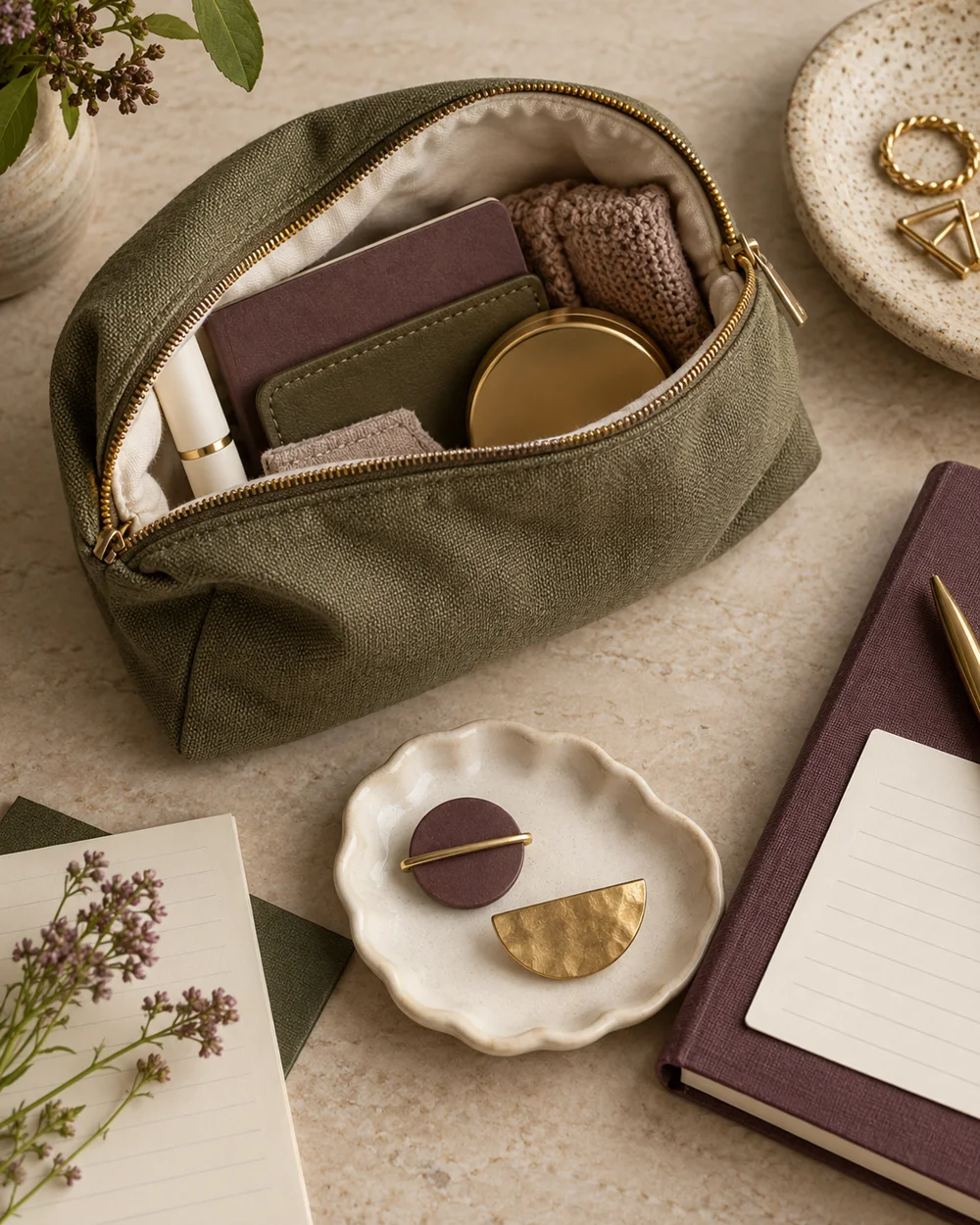
NOTE 01
Define the task
Read the maker information and inspect the empty pouch in good light. Look for loose threads, rough seams, residue, or a damaged closure without pulling the lining.
NOTE 02
Choose a suitable setup
Compare visibility using ordinary nonvaluable dry items. Keep sharp objects and liquids out unless the organizer is specifically intended and appropriate for them.
NOTE 03
Test ordinary access
Check whether the lining lies smoothly and leaves room near the opening. Do not hide a rough edge beneath loose fabric and assume the underlying problem is resolved.
NOTE 04
Keep the arrangement useful
Follow the pouch’s care guidance and use another suitable container when its condition is uncertain. A visual check is limited and does not prove long-term compatibility with delicate contents.
Before you go.
What is the most useful detail to remember?
Choose inspectability and practical fit before a decorative lining pattern.
What should I establish before starting?
Read the maker information and inspect the empty pouch in good light. Look for loose threads, rough seams, residue, or a damaged closure without pulling the lining.
Original editorial guidance. Photographs are AI-generated concepts; they do not show verified products, material specifications, or tested results. Sources & approach.
Save to Pinterest ↗FOLLOW THE DETAIL
A note to read next.
Small organizers
Choose a Pouch Size for Actual Small Items
Read the note ↗
Small organizers
Compare a Flat Pouch With a Gusseted Pouch
Read the note ↗
Small organizers