Compare a Flexible Shoe Bag With a Rigid Shoe Box
A fabric shoe bag and a rigid box solve different packing and storage problems. Compare the pair’s shape, the available space, and the kind of protection you actually need.
Read the note ↓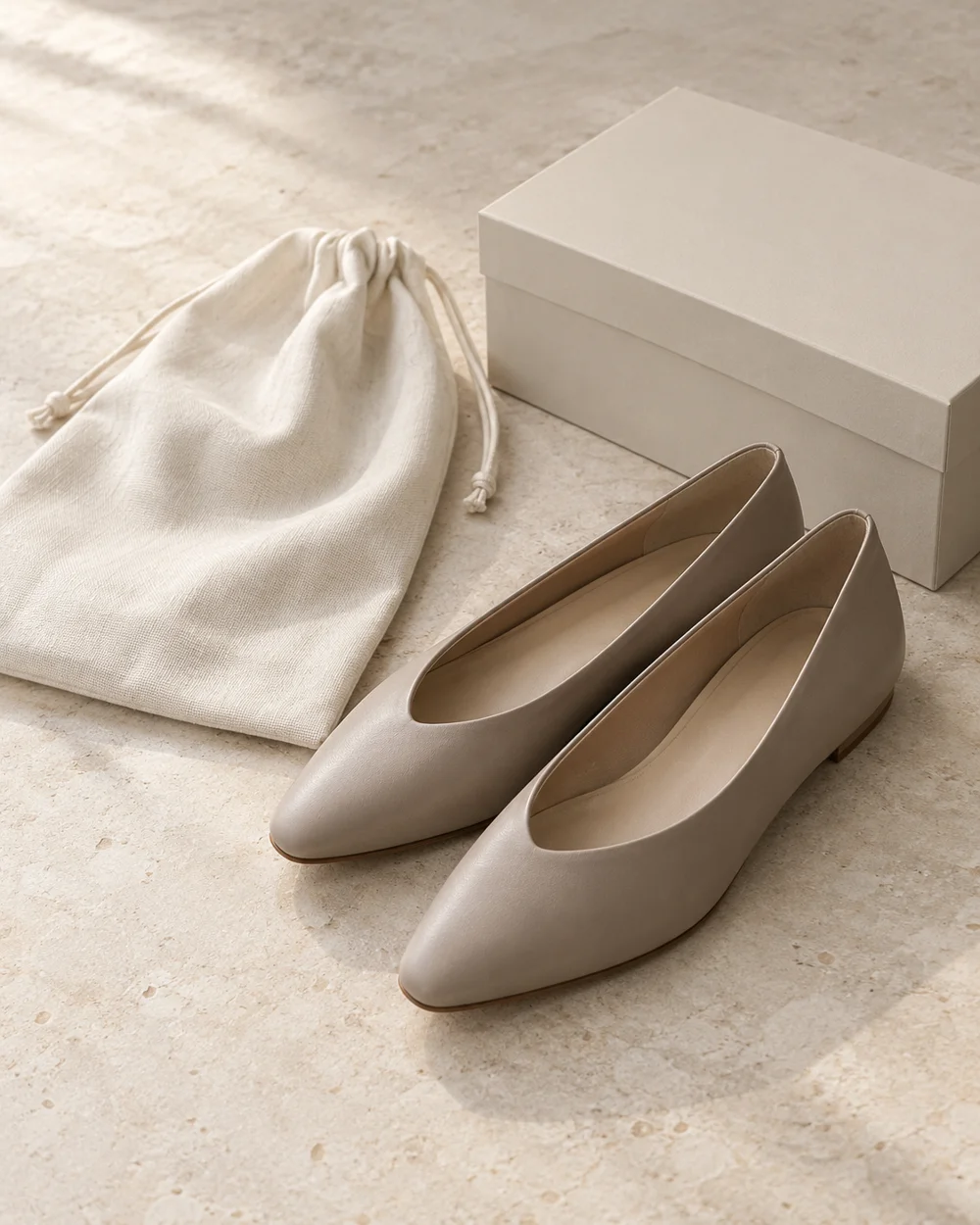
NOTE 01
Identify the actual pair
Measure the shoes together and read any storage guidance from their maker. A bag that closes only when the pair is squeezed is not a useful fit reference.
NOTE 02
Make a clear first check
Place the dry, suitable pair in the bag without forcing the closure. Then compare a clean rigid box with enough room around raised details and fasteners. Use the same pair in both comparisons and note the outside space each container needs. Then consider its real destination: a shelf with little pressure presents a different problem from a tightly filled travel bag. Record access and protection separately. A flexible bag can be convenient to open while still offering little support against surrounding contents, so the smaller container is not automatically the more useful one.
NOTE 03
Compare under useful conditions
Notice whether the container separates the shoes from other contents and whether it resists the pressure expected in its location. A soft bag should not be treated as crush protection.
NOTE 04
Keep the model-specific record
Choose according to the actual use and check contents before packing again. Neither a bag nor a box establishes safe long-term conditions for every material.
Before you go.
What is the main point to remember?
Match the container to the job; separation and crush resistance are different needs.
What should I establish before starting?
Measure the shoes together and read any storage guidance from their maker. A bag that closes only when the pair is squeezed is not a useful fit reference.
Original editorial guidance. Photographs are AI-generated concepts; they do not show verified products, material specifications, or tested results. Sources & approach.
Save to Pinterest ↗FOLLOW THE DETAIL