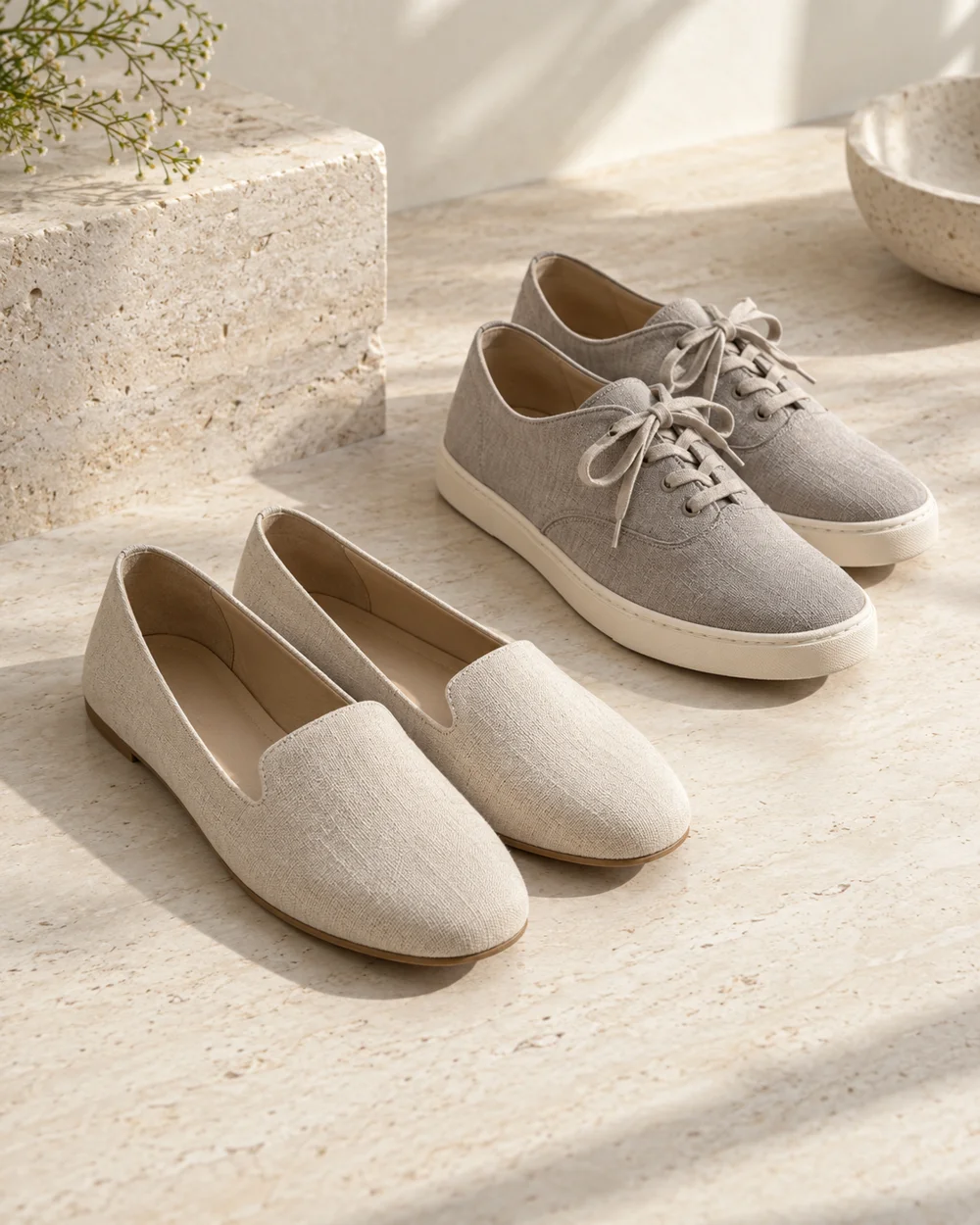
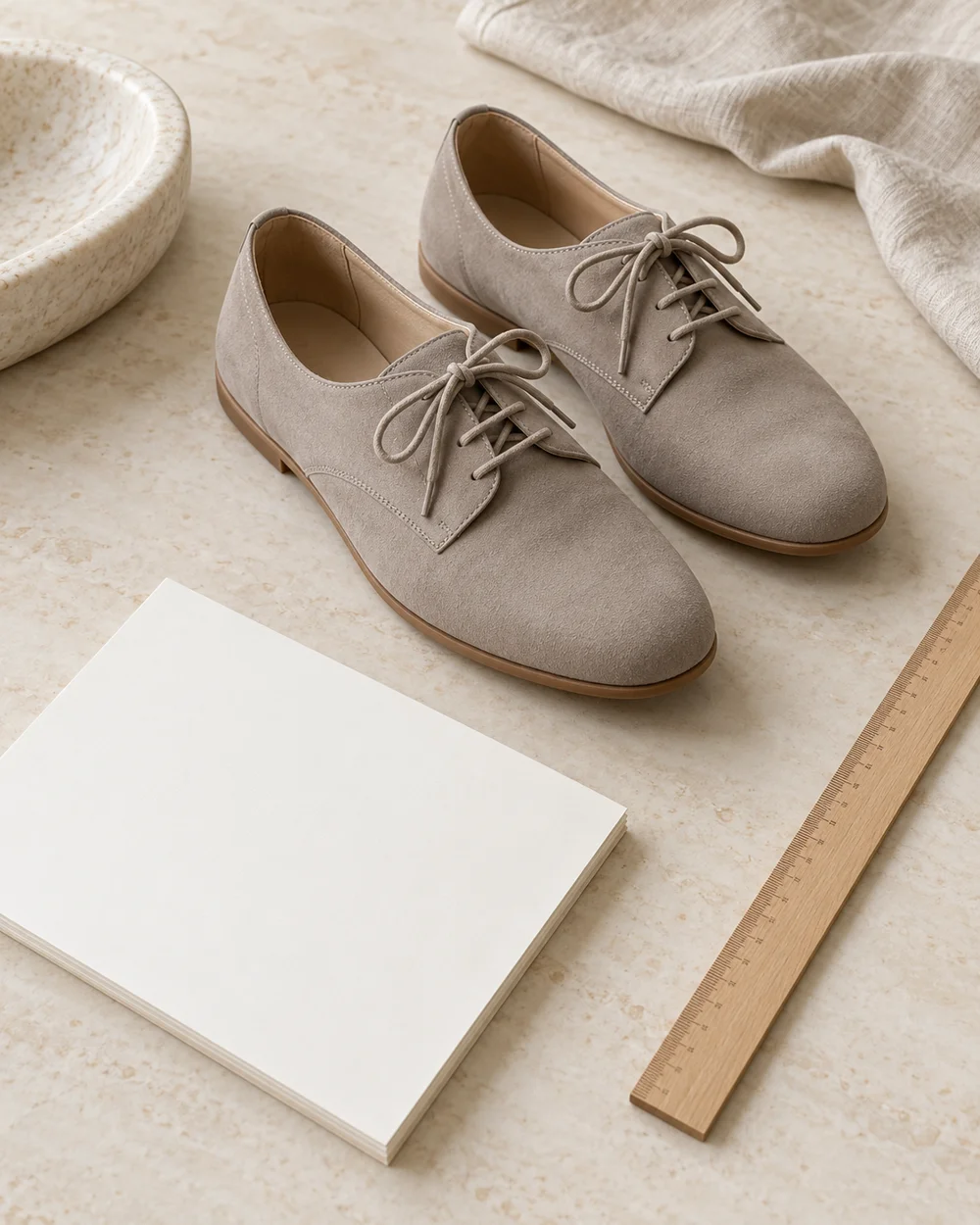
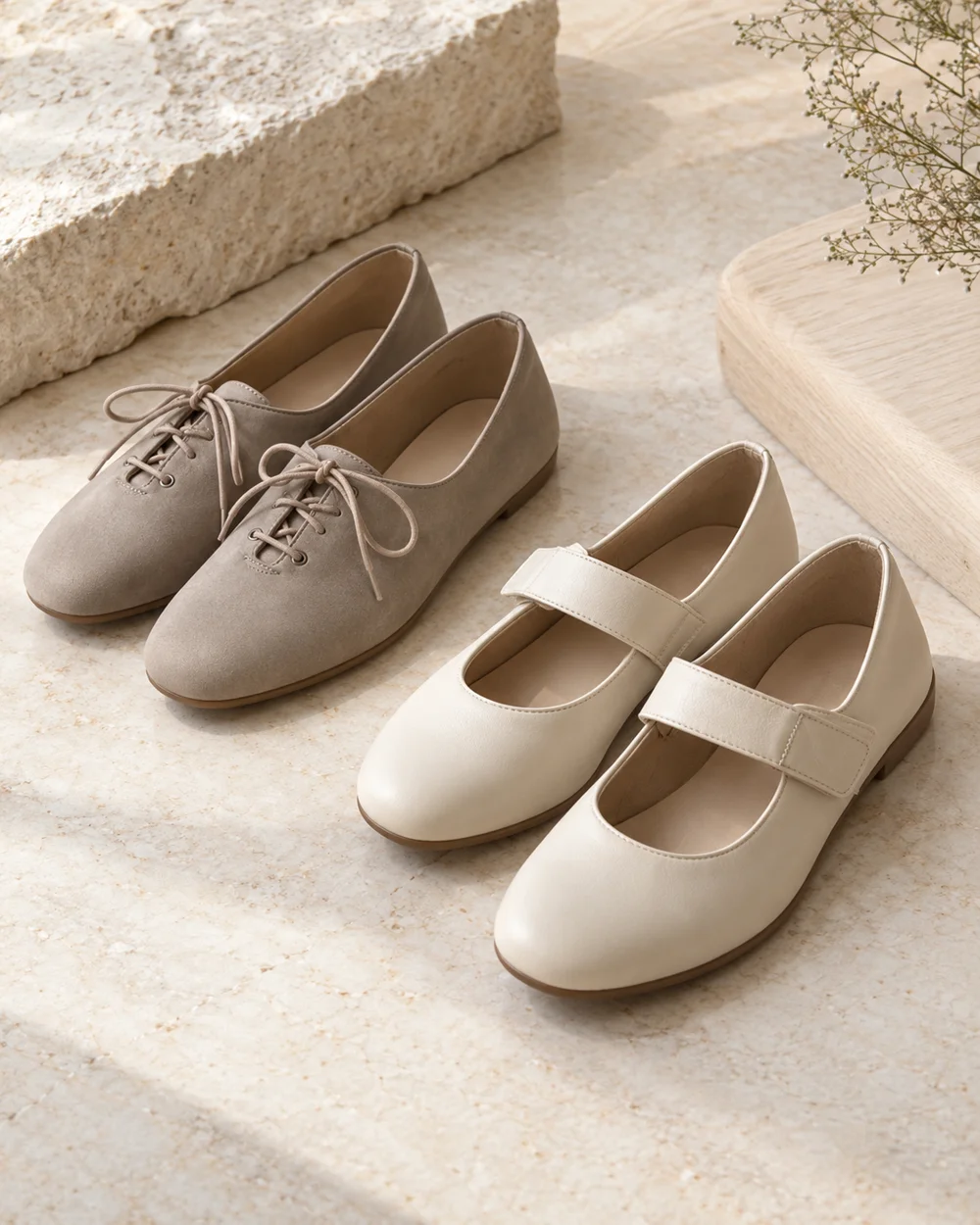
Compare Two Neutral Shoe Colors With Existing Clothes
Gray and taupe shoes can be compared beside clothes already in your wardrobe. The purpose is to see useful combinations, not to find a supposedly universal neutral.
Read the note ↓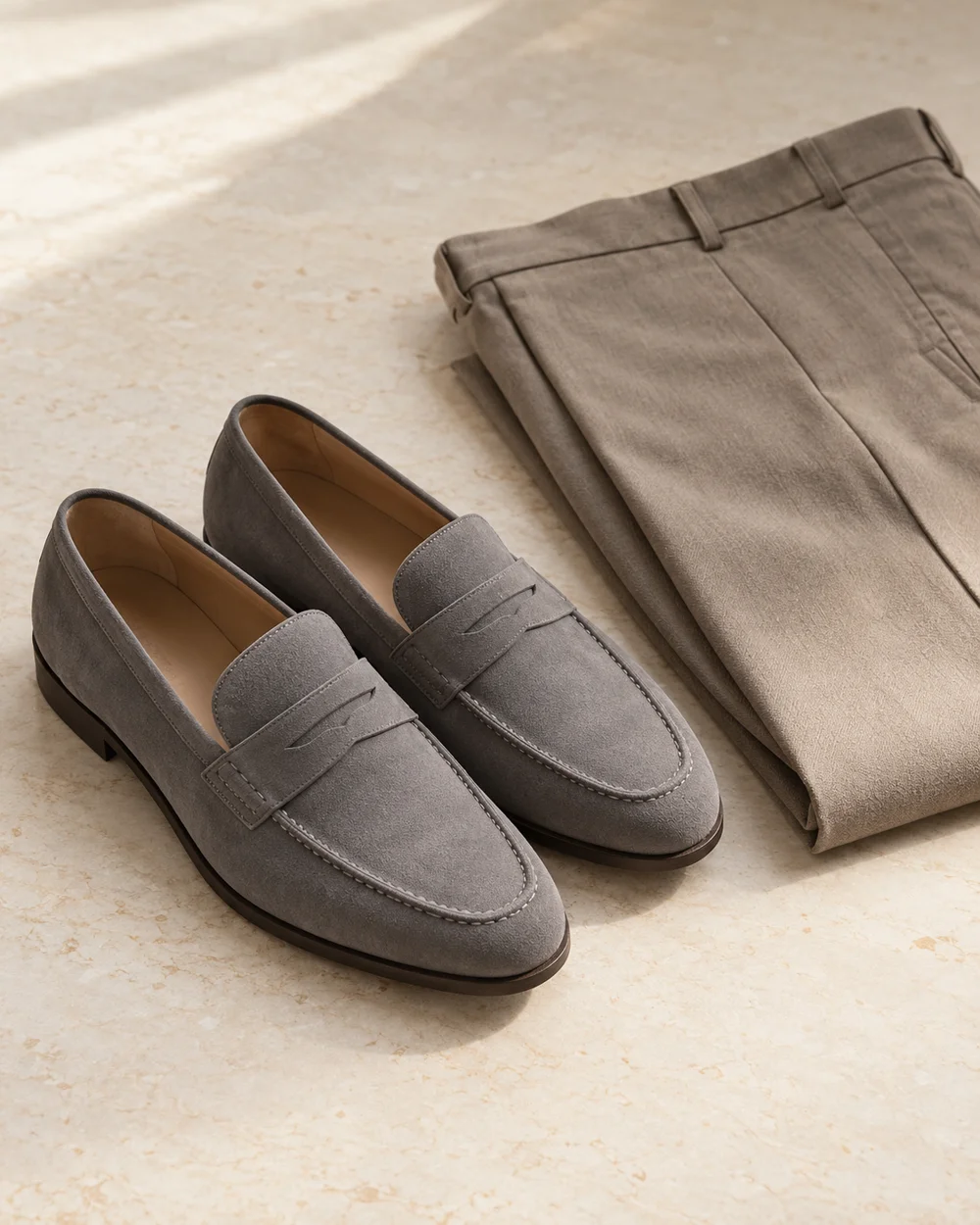
NOTE 01
Identify the actual pair
Choose two actual candidate colors and one or two opaque garments you use often. Lay everything on a suitable clean surface with consistent light.
NOTE 02
Make a clear first check
Place each pair beside the same folded garment and take a simple reference photograph. Keep shoe size and cloth area similar in the frame so one arrangement is not visually exaggerated. Try the gray pair beside one folded garment, then replace only the shoes with the taupe pair. Keep the garment and light in place. If both combinations are useful, note that outcome without inventing a need for two new pairs. The exercise can also confirm that an existing pair already works with the wardrobe. Color comparison is most helpful when it narrows choices rather than expands them automatically.
NOTE 03
Compare under useful conditions
Compare the actual objects as well as the images. Subtle color differences may be lost on a phone, and a pleasing match does not establish fit or material suitability.
NOTE 04
Keep the model-specific record
Keep the combinations you would realistically use. Check composition and care through product information separately, especially when material origin affects your purchasing boundaries.
Before you go.
What is the main point to remember?
Use your existing clothes as the comparison set rather than buying a matching wardrobe.
What should I establish before starting?
Choose two actual candidate colors and one or two opaque garments you use often. Lay everything on a suitable clean surface with consistent light.
Original editorial guidance. Photographs are AI-generated concepts; they do not show verified products, material specifications, or tested results. Sources & approach.
Save to Pinterest ↗FOLLOW THE DETAIL