Check Luggage Dimensions Before Choosing Packing Cubes
Packing cubes need to fit the usable interior of the actual luggage. Outside suitcase dimensions do not describe every wheel housing, lining shape, or internal compartment.
Read the note ↓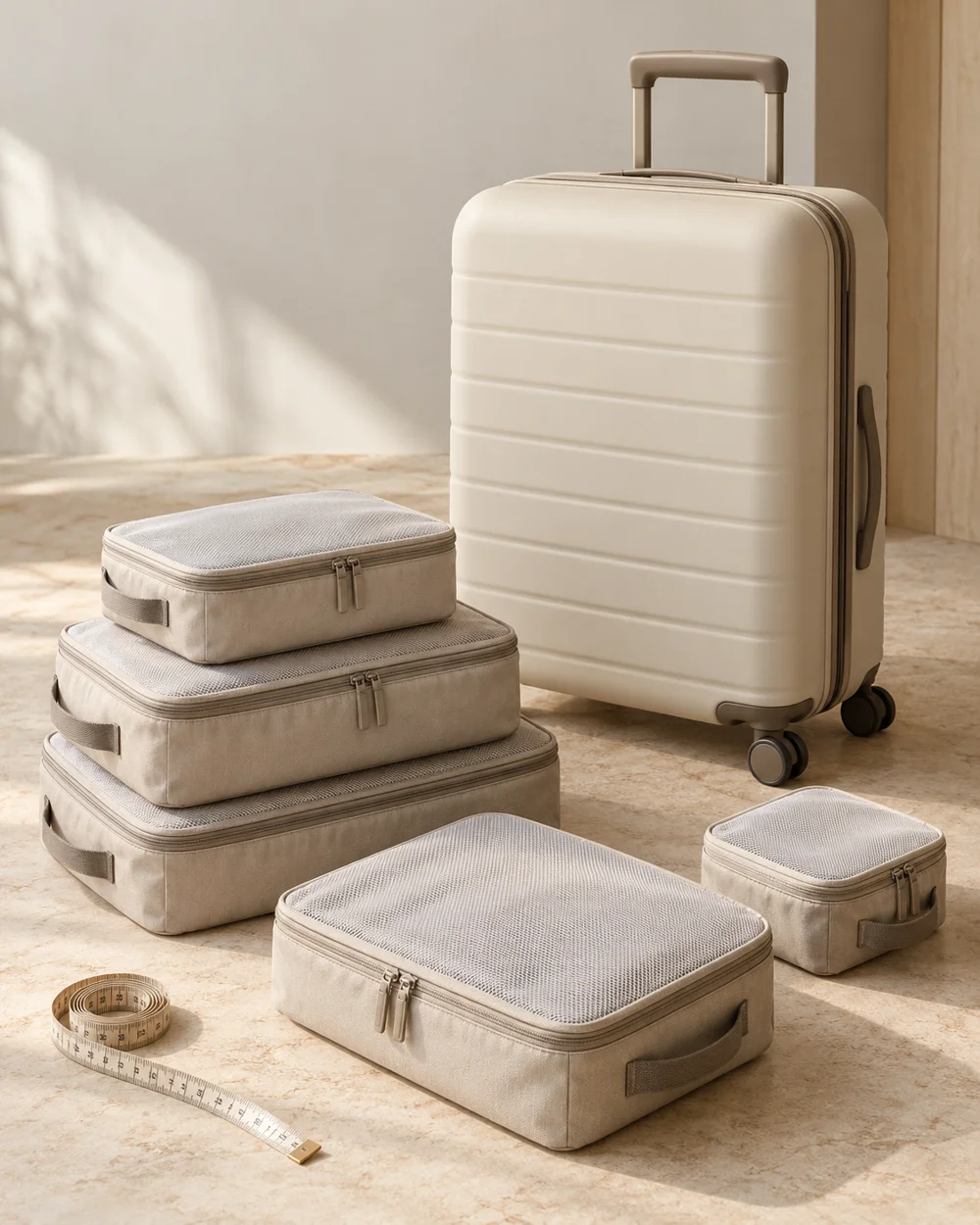
NOTE 01
Use the real trip plan
Read the luggage maker’s dimensions and measure the usable space without straining the case. Check any current carrier limits separately through the carrier’s official information.
NOTE 02
Set out the actual items
Compare the empty cubes with the interior, including the room required for handles and closures. Avoid selecting cubes from a photo of a different case size. Draw the usable interior as a rough plan and place the empty cubes in the real case before filling them. Note any intrusion from wheels, handles, or built-in pockets. Then repeat the check with the intended contents. This two-stage comparison helps explain why a cube set shown in a product image might not work in your luggage even when its nominal total volume appears suitable.
NOTE 03
Check the practical arrangement
Add the intended clothes and check the arrangement again. A cube that fits empty can become too bulky when filled, and the case should not require forced closure.
NOTE 04
Review and keep the useful notes
Keep the cube sizes and arrangement in your packing record. Capacity planning does not establish compliance with a carrier’s weight or dimension rules.
Before you go.
What is the main point to remember?
Check the packed cube arrangement in the real case before treating the layout as settled.
What should I establish before starting?
Read the luggage maker’s dimensions and measure the usable space without straining the case. Check any current carrier limits separately through the carrier’s official information.
Original editorial guidance. Photographs are AI-generated concepts; they do not show verified products, material specifications, or tested results. Sources & approach.
Save to Pinterest ↗FOLLOW THE DETAIL