Count Complete Clothing Changes Before Packing Extras
Counting complete changes helps reveal whether a pile contains useful combinations or disconnected extras. Work from the actual trip length and practical clothing needs.
Read the note ↓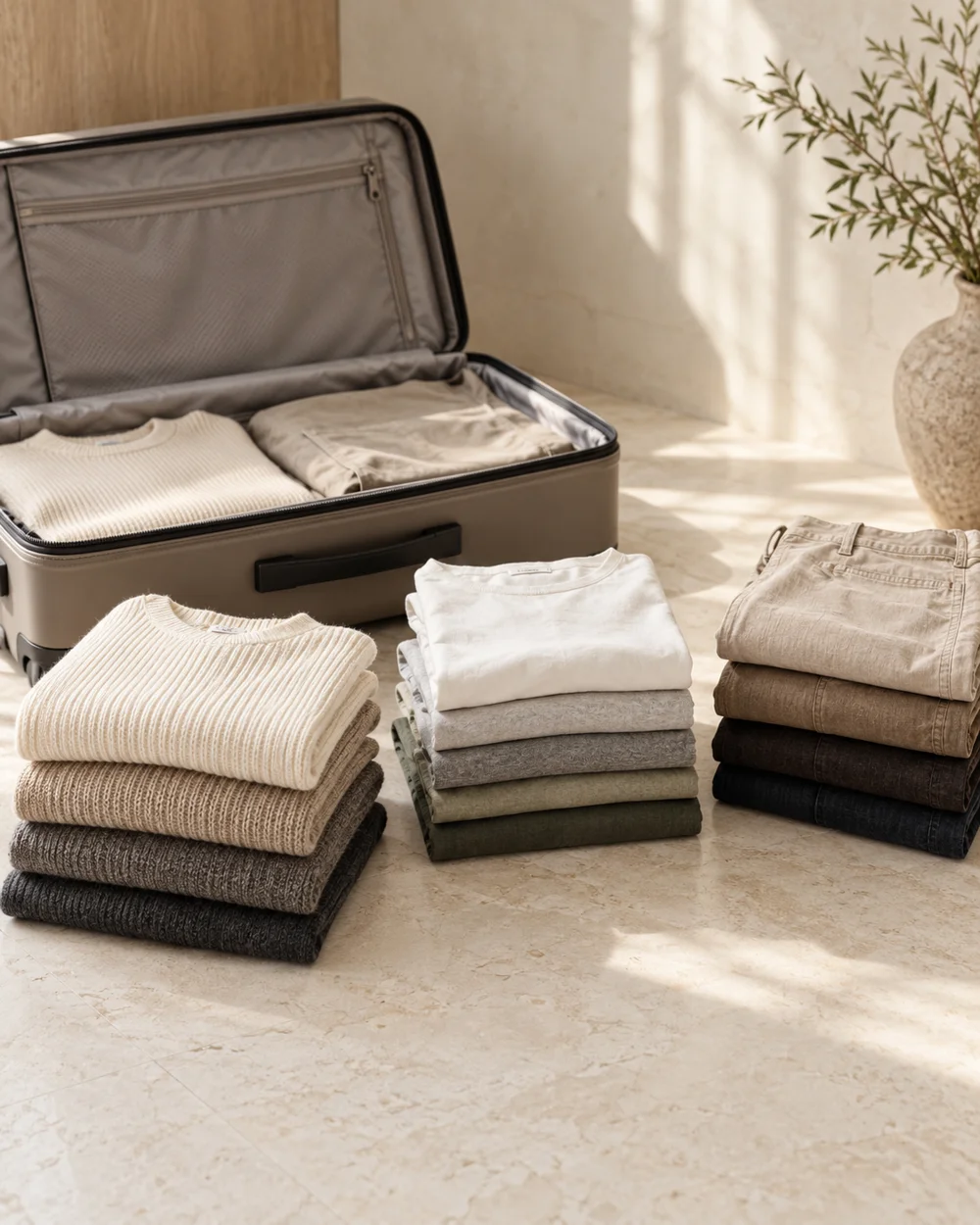
NOTE 01
Use the real trip plan
Make a day-by-day outline that includes the first and last travel days. Record any genuine requirement for an additional change without assuming every day is identical.
NOTE 02
Set out the actual items
Set out the opaque garments needed for each planned change. Keep a simple item reference so one piece appearing in two plans is not accidentally counted as two physical garments. Use a simple grid with planned changes down one side and item identifiers across the top. A piece used in more than one plan can appear in several cells while remaining one item in the packing count. This reveals missing combinations and duplication more clearly than a pile of folded clothes. Keep the method proportionate; a short trip may need only a few handwritten lines.
NOTE 03
Check the practical arrangement
Review reuse only in the context of your routine and realistic care access. Do not let an attractive flat lay override a need for clean suitable clothing.
NOTE 04
Review and keep the useful notes
Count the actual items before packing and compare them with the list. Keep optional extras visible as a separate decision rather than hiding them in the main count.
Before you go.
What is the main point to remember?
Count physical items and planned changes as two related but different totals.
What should I establish before starting?
Make a day-by-day outline that includes the first and last travel days. Record any genuine requirement for an additional change without assuming every day is identical.
Original editorial guidance. Photographs are AI-generated concepts; they do not show verified products, material specifications, or tested results. Sources & approach.
Save to Pinterest ↗FOLLOW THE DETAIL