Check Buckle Dimensions Before Buying a Belt
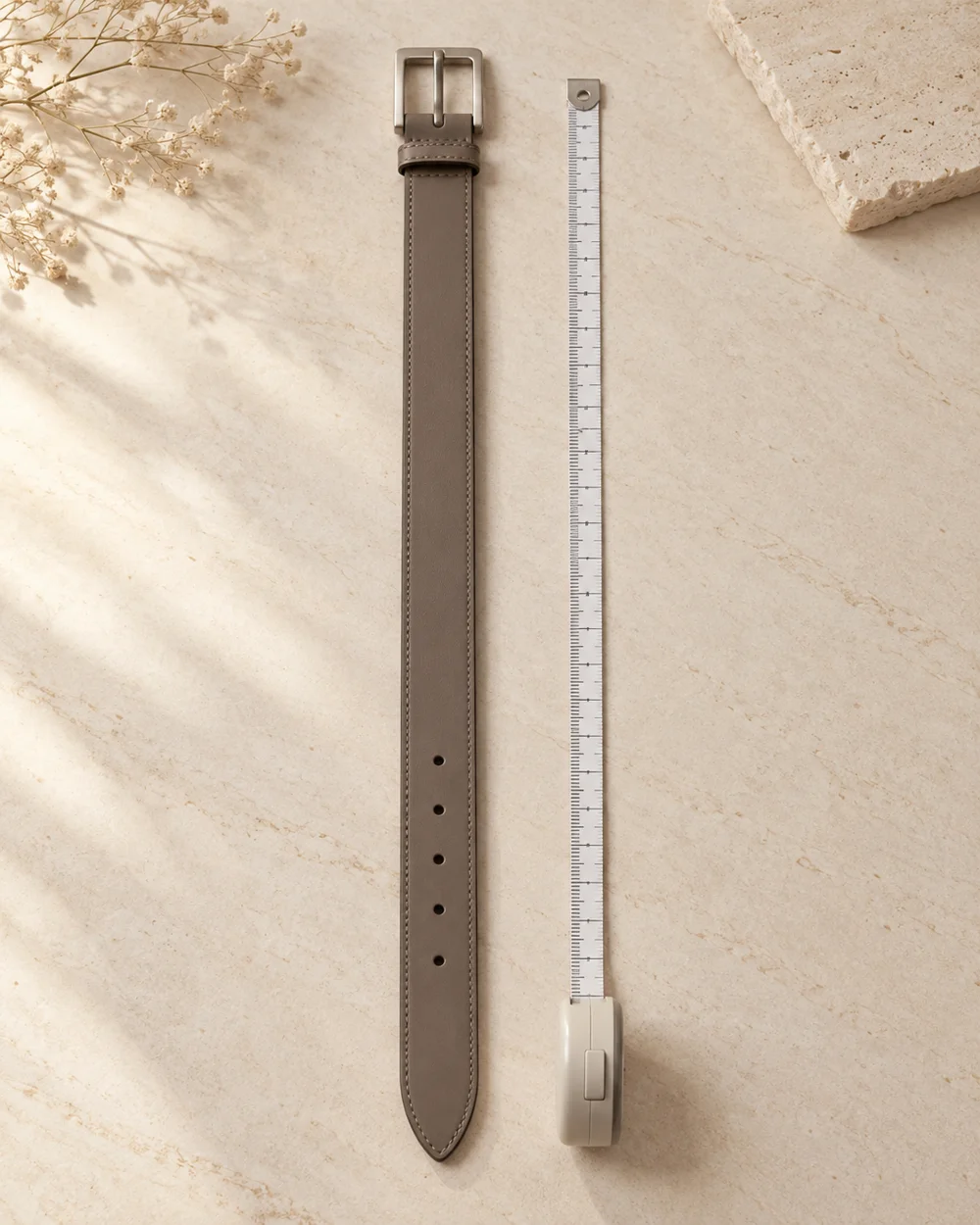
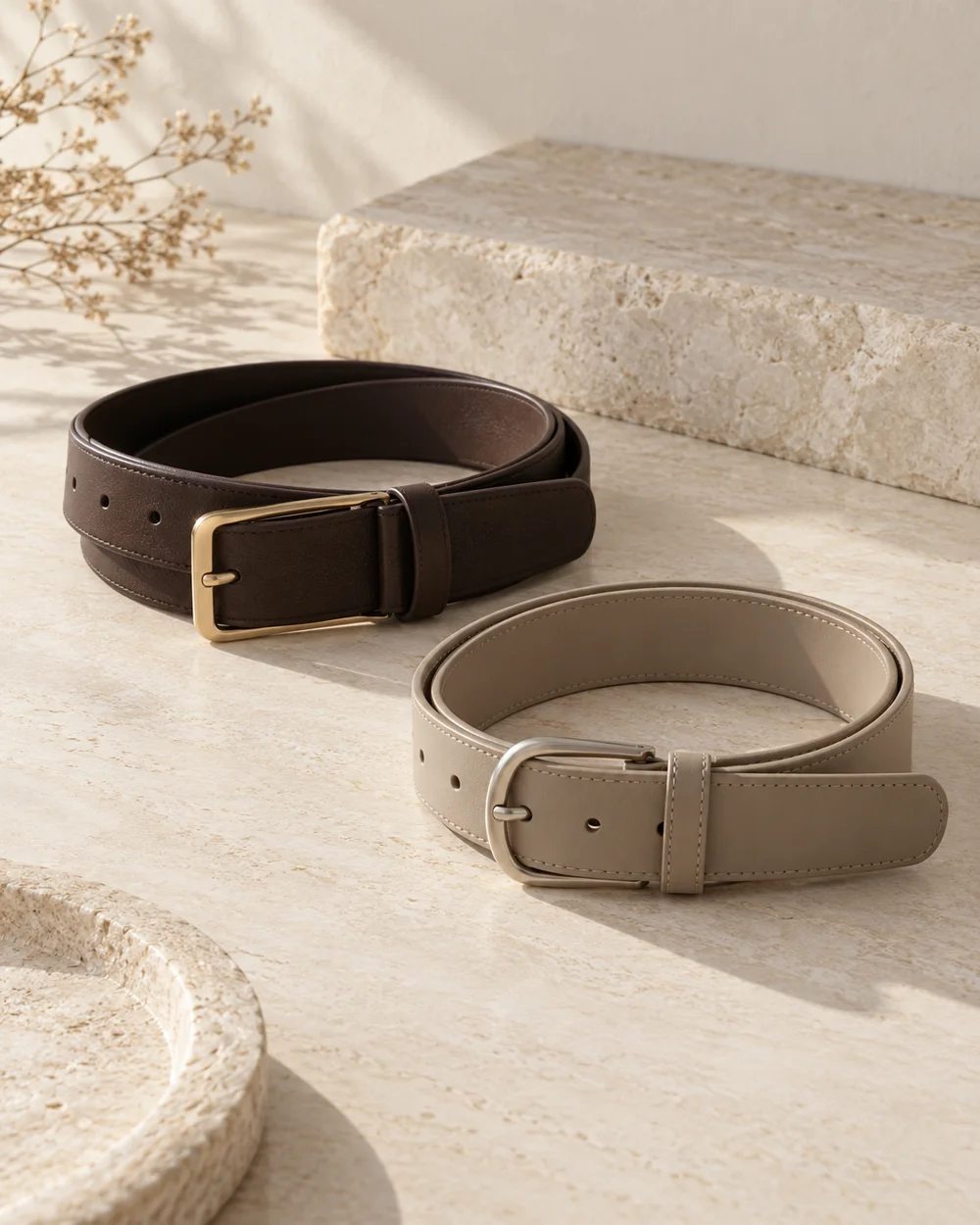
A buckle’s outside dimensions can affect both a flat-lay composition and practical garment clearance. Begin with the actual product measurements rather than estimating from a cropped photograph.
Read the note ↓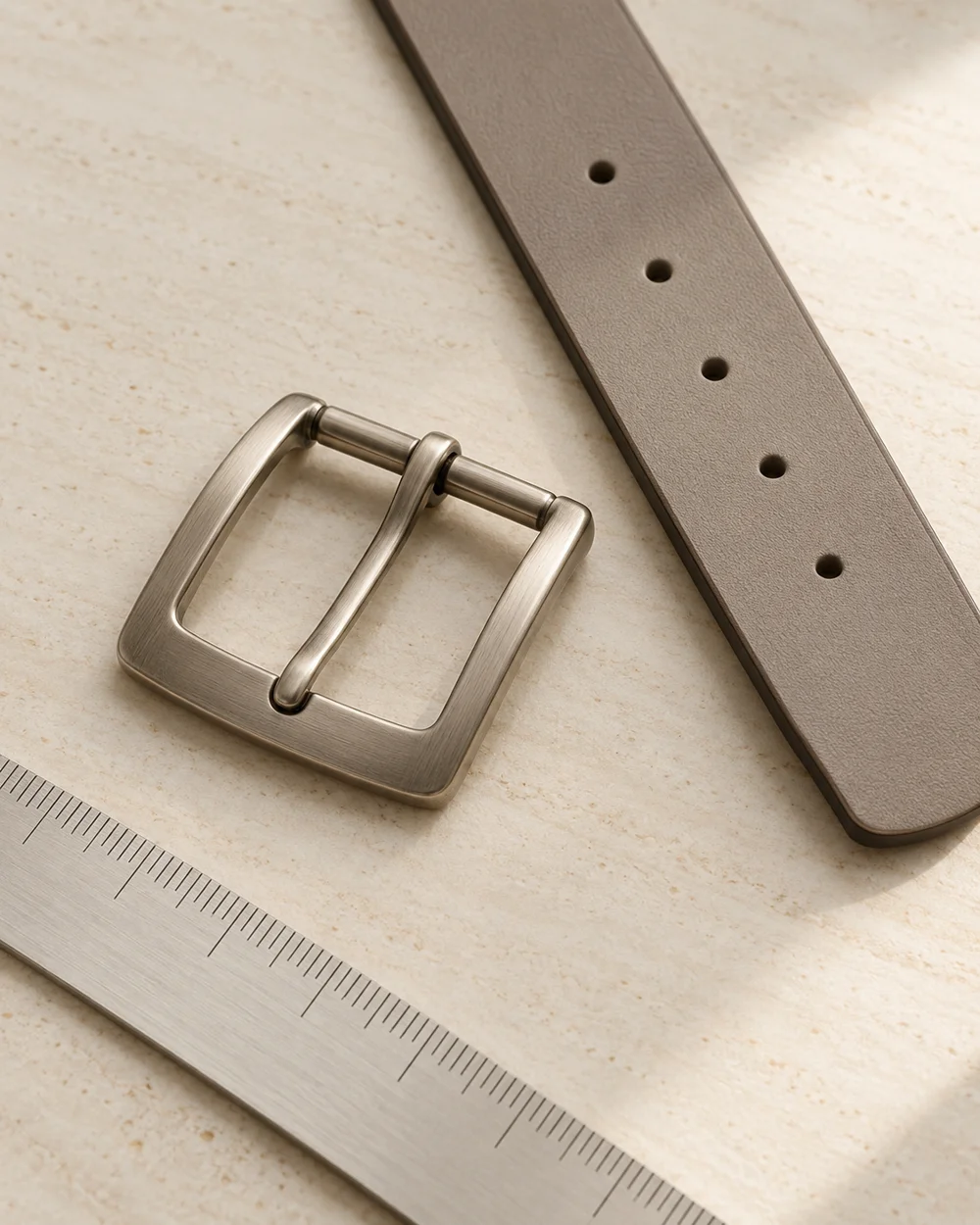
NOTE 01
Establish the product details
Identify which dimensions the maker supplies: outside width, height, strap opening, or another reference. Keep the terms beside the numbers to avoid comparing unlike measurements.
NOTE 02
Make the practical comparison
Measure an existing buckle using the same reference where possible. Include the part that projects beyond the strap and any keeper that sits next to it. Sketch a rectangle for the outside buckle and a separate line for the strap opening. These two references help prevent a product width from being mistaken for an opening width. If a seller provides only an overall number, ask which dimension it represents before drawing a conclusion. A plain sketch in your private notebook can be more useful for this purpose than a carefully styled photograph without named reference points.
NOTE 03
Resolve the remaining question
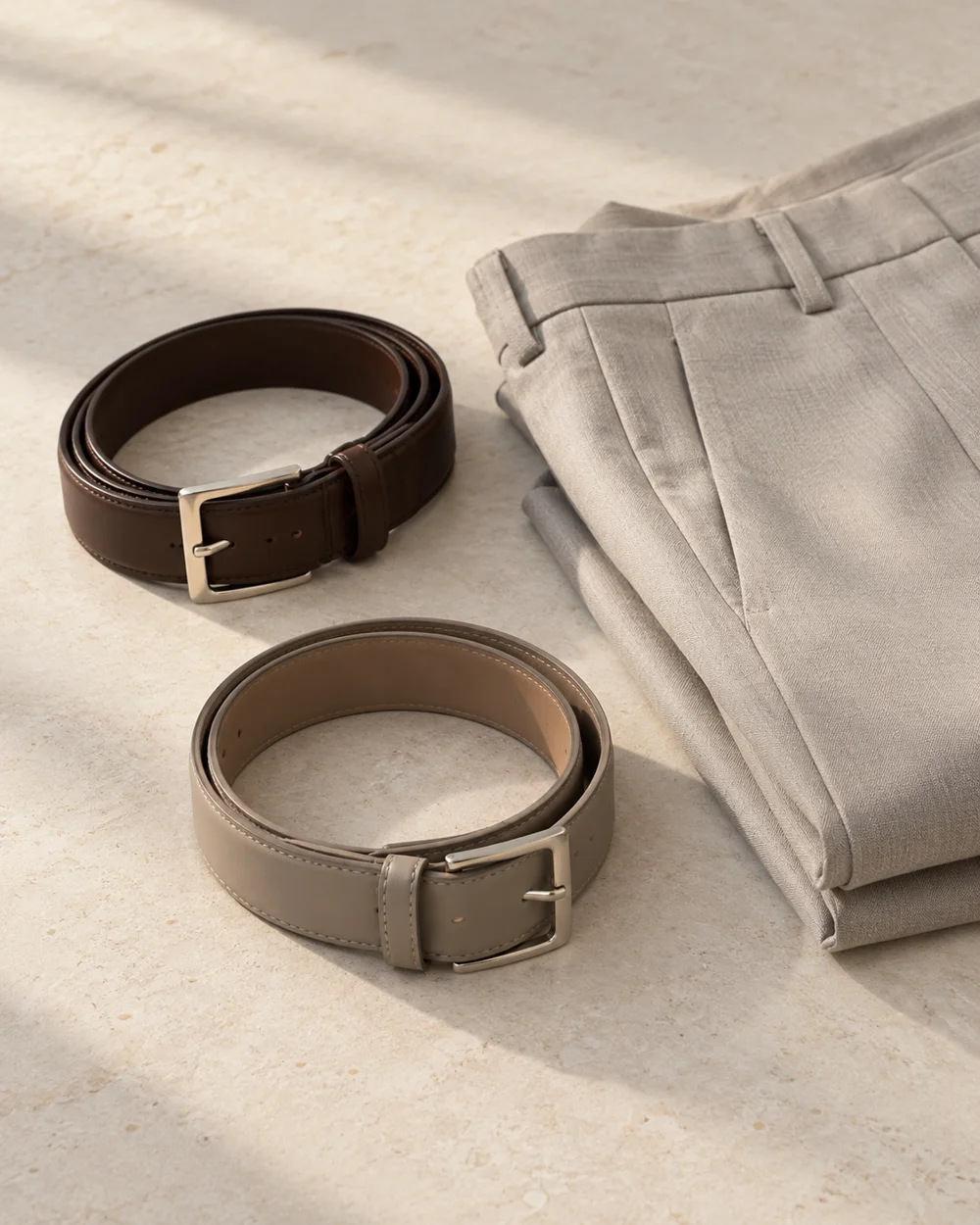
Compare the complete belt with the unworn garment without forcing hardware through loops. A decorative buckle may also have a working mechanism that requires its own instructions.
NOTE 04
Keep a useful reference
Ask the seller about missing dimensions before ordering. A visual match in shape does not guarantee compatible strap width, attachment, or usable length.
Before you go.
What is the main point to remember?
Buckle size and strap size are related, but they are not the same measurement.
What should I establish before starting?
Identify which dimensions the maker supplies: outside width, height, strap opening, or another reference. Keep the terms beside the numbers to avoid comparing unlike measurements.
Original editorial guidance. Photographs are AI-generated concepts; they do not show verified products, material specifications, or tested results. Sources & approach.
Save to Pinterest ↗FOLLOW THE DETAIL