Measure an Existing Belt Before Replacing It
An existing belt can provide a useful replacement reference when its actual working length is recorded. The overall strap length alone may not match the sizing method used by a maker.
Read the note ↓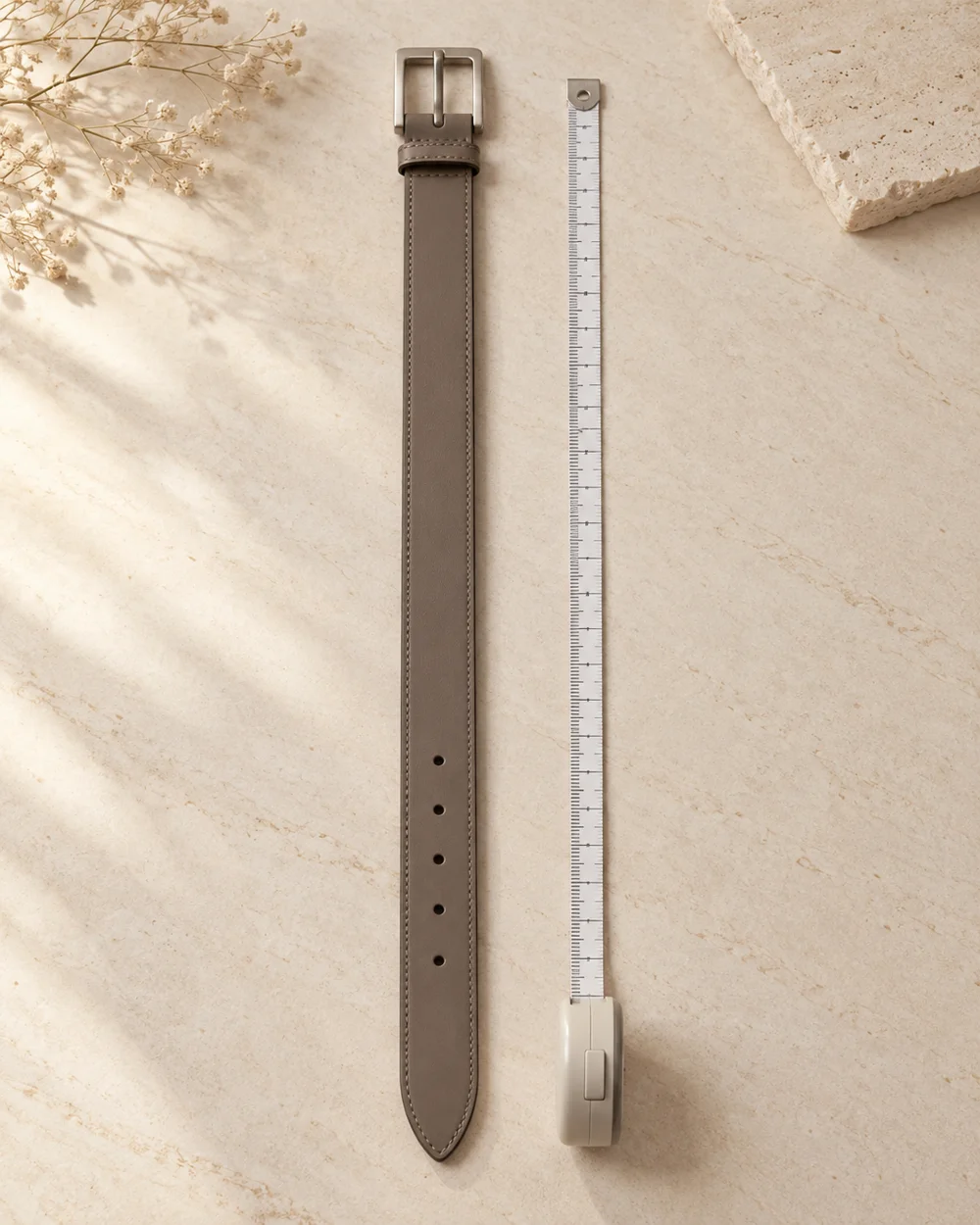
NOTE 01
Establish the product details
Choose a belt that is suitable for the intended garment and lay it on a clean flat surface. Find the new maker’s measurement directions before deciding which points to measure.
NOTE 02
Make the practical comparison
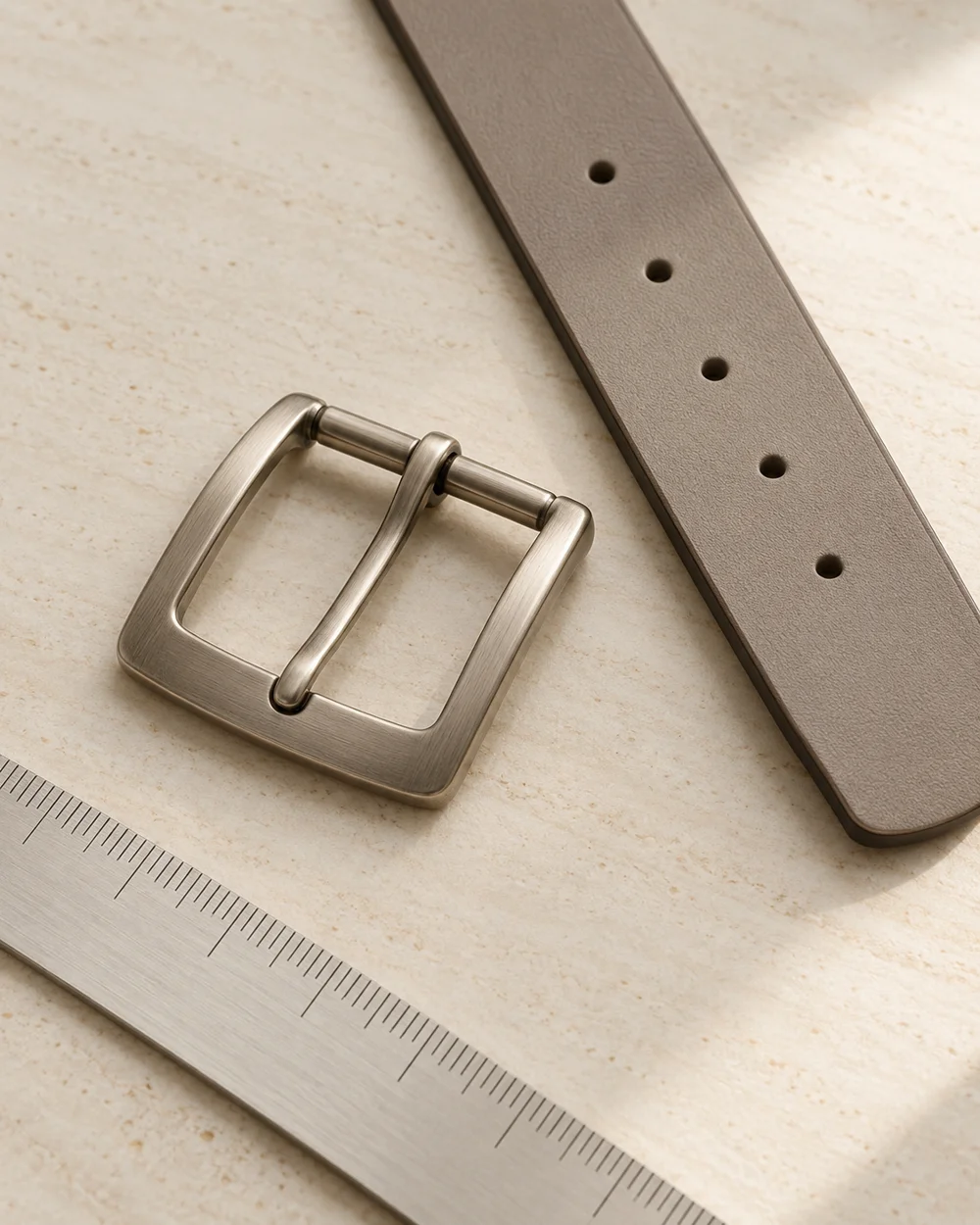
Measure using that stated method and note the unit. Record the buckle reference point and the working hole or adjustment position so the number has a clear meaning. A private note can show a simple diagram with the chosen reference point at the buckle and the working position on the strap. Write the unit beside the result and name the maker method used. If another chart measures from a different point, keep a second clearly labeled number rather than silently substituting it. This makes a later replacement enquiry easier even when the old and new brands use different size labels.
NOTE 03
Resolve the remaining question
Compare the result with the exact product chart rather than converting from a clothing size by guesswork. If the chart uses another method, ask the seller to explain the difference.
NOTE 04
Keep a useful reference
Keep the measurement with the belt reference and garment used. A matching length does not establish material composition, buckle suitability, or comfort in every garment.
Before you go.
What is the main point to remember?
A belt measurement needs named endpoints as well as a number.
What should I establish before starting?
Choose a belt that is suitable for the intended garment and lay it on a clean flat surface. Find the new maker’s measurement directions before deciding which points to measure.
Original editorial guidance. Photographs are AI-generated concepts; they do not show verified products, material specifications, or tested results. Sources & approach.
Save to Pinterest ↗FOLLOW THE DETAIL