Make a Packing Cube Contents Card Without Personal Data
A removable contents card can help identify a packing cube without exposing personal information. Keep it generic enough for a shared luggage photo.
Read the note ↓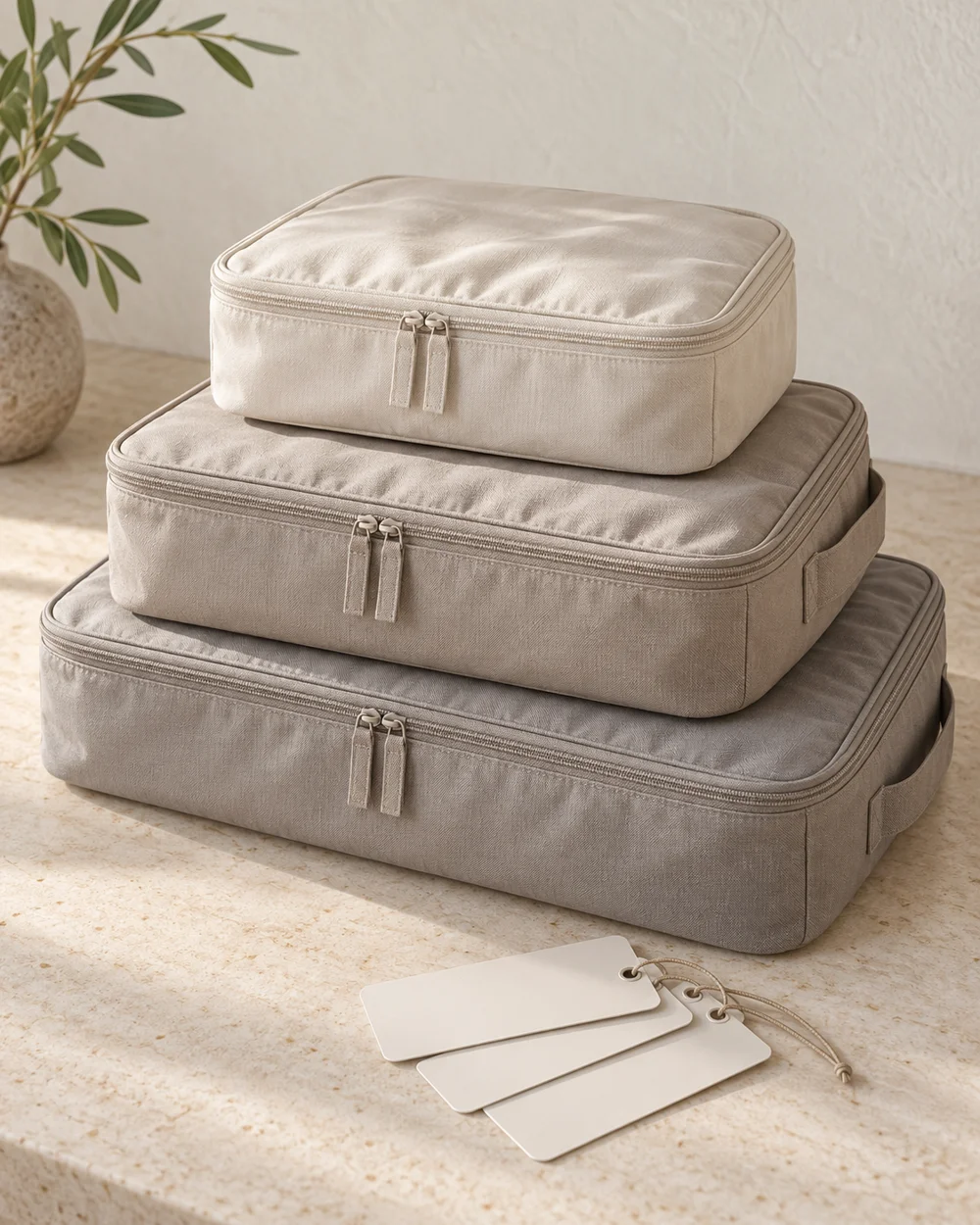
NOTE 01
Use the real trip plan
Choose a simple cube identifier and a short description such as folded layers. Store names, addresses, booking references, and detailed personal records elsewhere.
NOTE 02
Set out the actual items
Attach or place the card only in a way supported by the cube’s construction. Avoid pins or sticky products that could damage fabric or interfere with a zipper. Use short generic labels such as layers or first-night clothes, with a private detailed list elsewhere if needed. Check the card placement when the cube is closed and inside the luggage. If it is hidden, changing its supported position may be more useful than adding another external tag. The goal is identification for you without creating a public display of personal travel information.
NOTE 03
Check the practical arrangement
Check that the label remains readable to you without needing to open neighboring cubes. Use a private detailed list separately if the general description is insufficient.
NOTE 04
Review and keep the useful notes
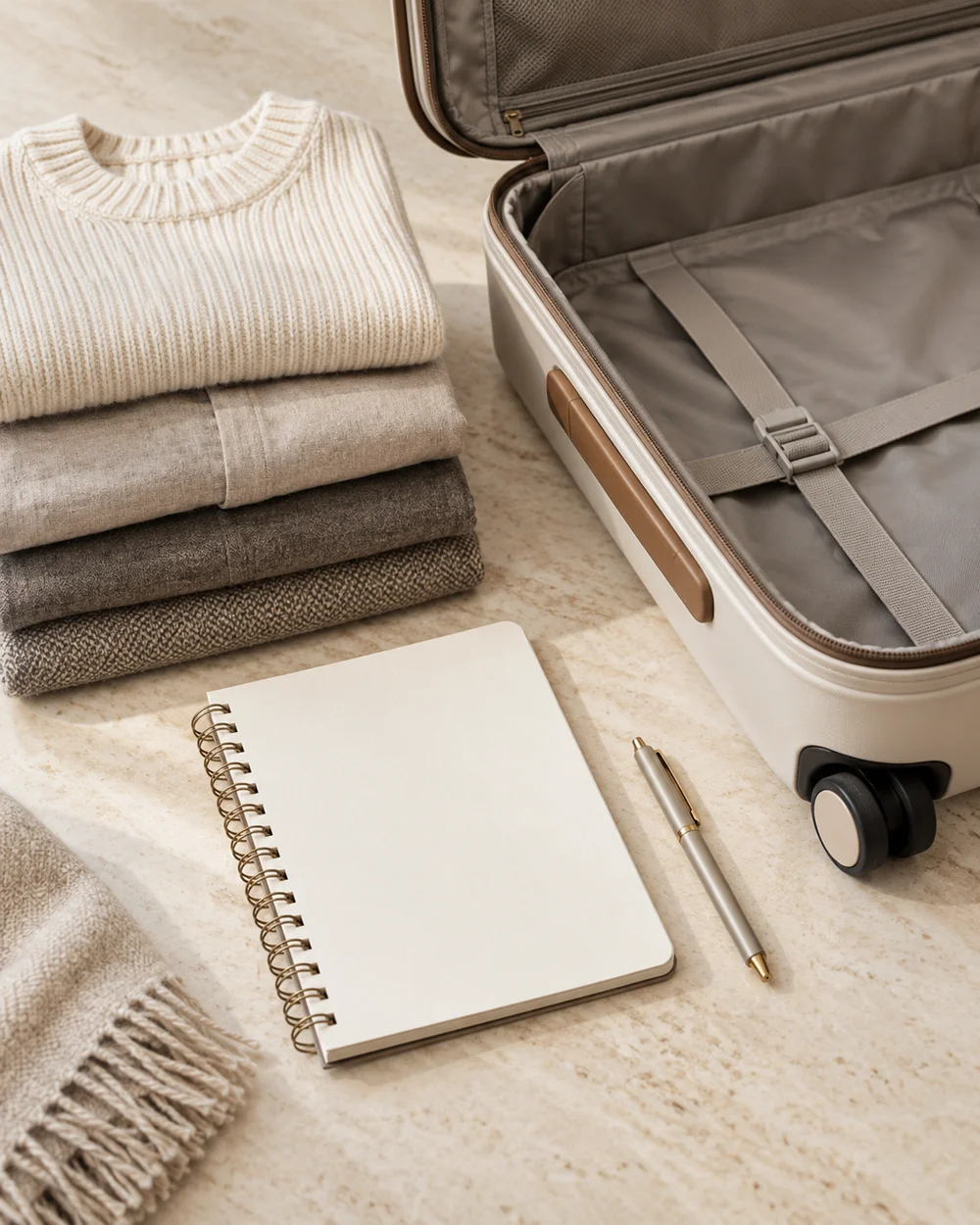
Update the card when the contents change and remove old versions. Blank cards in our image are visual examples rather than generated personal information.
Before you go.
What is the main point to remember?
Use the label to identify a group, not to display private travel details.
What should I establish before starting?
Choose a simple cube identifier and a short description such as folded layers. Store names, addresses, booking references, and detailed personal records elsewhere.
Original editorial guidance. Photographs are AI-generated concepts; they do not show verified products, material specifications, or tested results. Sources & approach.
Save to Pinterest ↗FOLLOW THE DETAIL