Explore Rose and Wood Scent Descriptions on Paper
Rose and wood are useful starting words for a fragrance notebook, but neither describes a single universal smell. A finished scent can interpret them in many ways. This exercise uses the terms as descriptive prompts while you compare properly identified finished products on separate paper strips.
Read the note ↓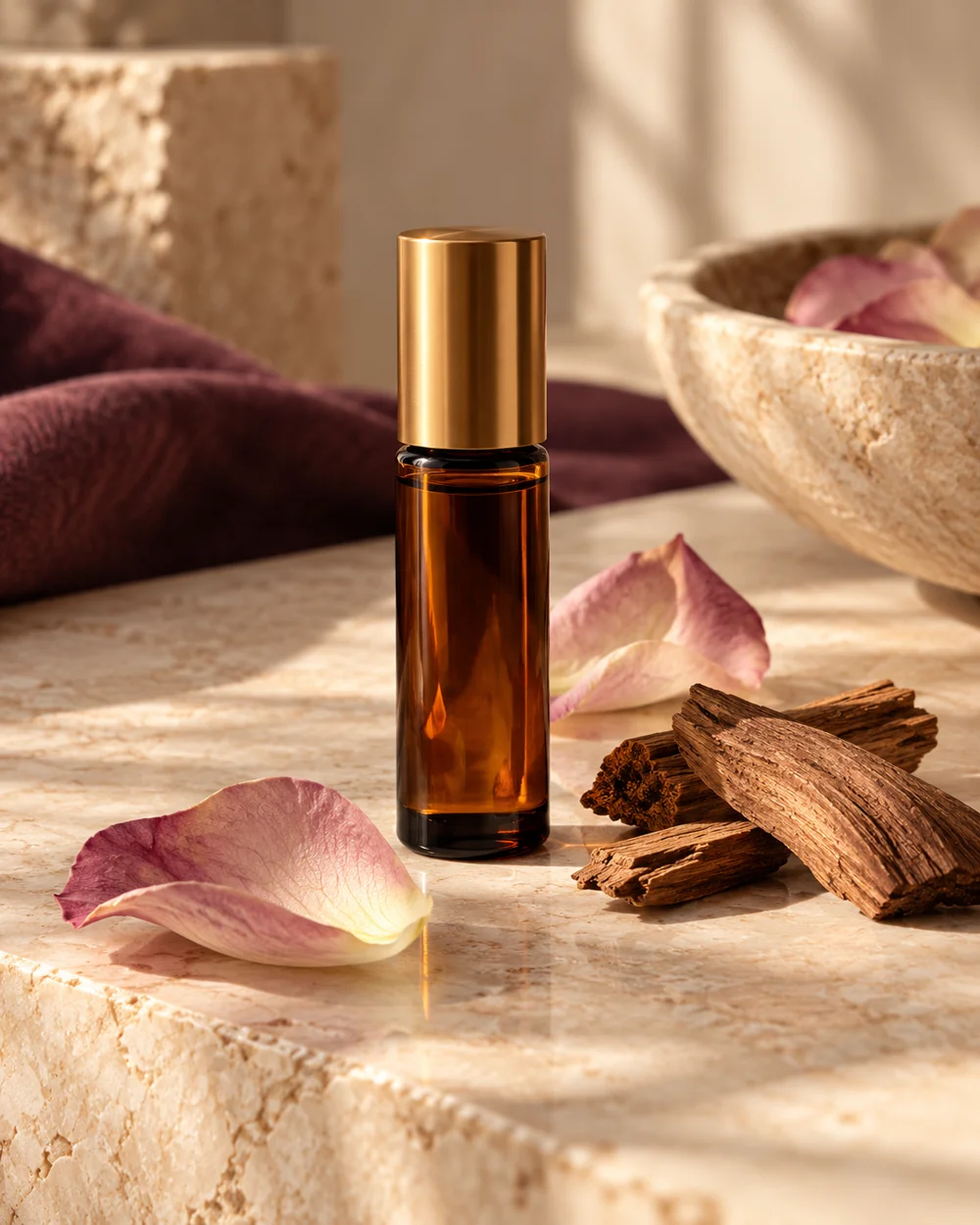
NOTE 01
Read the description
Write down the maker’s stated notes and keep them separate from the ingredient information. A rose or cedar note can describe an impression or an accord; it does not by itself establish a particular raw ingredient, source, or percentage. Our concept image uses petals and wood as visual cues, not as a verified product formula.
NOTE 02
Describe your own impression
Observe a suitable prepared paper sample on its own. For the floral impression, you might notice something fresh, soft, powdery, or rich; for the wood description, you may use words such as dry, smooth, or warm. These are optional vocabulary prompts, not guaranteed characteristics of every product carrying those notes.
NOTE 03
Compare the balance
Set the separate strips near one another without transferring liquid. Note which impression seems more prominent and whether the combination feels clear or crowded to you. Return to each individual strip to check what changed in your perception. Use modest sampling and take breaks rather than adding more and more fragrances at once.
NOTE 04
Keep a useful conclusion
Record whether you prefer each scent alone or simply want to revisit the pair another day. Keep the product identities and observation time beside the note. Do not turn the result into a blending ratio or a claim that the pair is suitable for everyone. Any use beyond paper observation needs the finished products’ own directions.
Before you go.
Does a rose note prove natural rose oil is present?
No. A named scent note is not a complete ingredient declaration or a source certificate.
Are the bottles pictured recommended products?
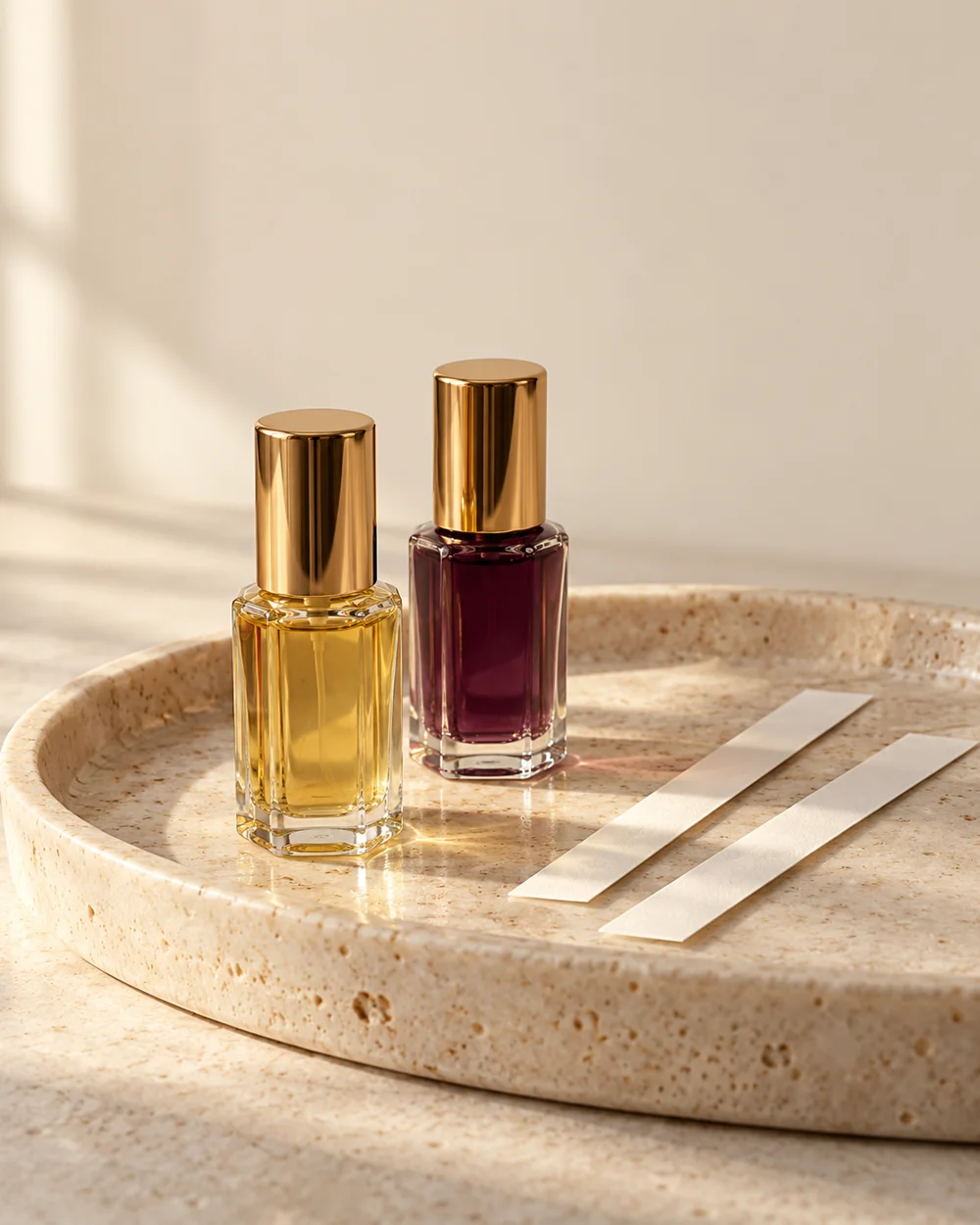
No. The unbranded bottles are AI-generated editorial concepts, with no verified contents or commercial identity.
Original editorial guidance. Photographs are AI-generated concepts; they do not show verified products, material specifications, or tested results. Sources & approach.
Save to Pinterest ↗FOLLOW THE DETAIL
A note to read next.
Scent pairing
Two notes. One considered pairing.
Read the note ↗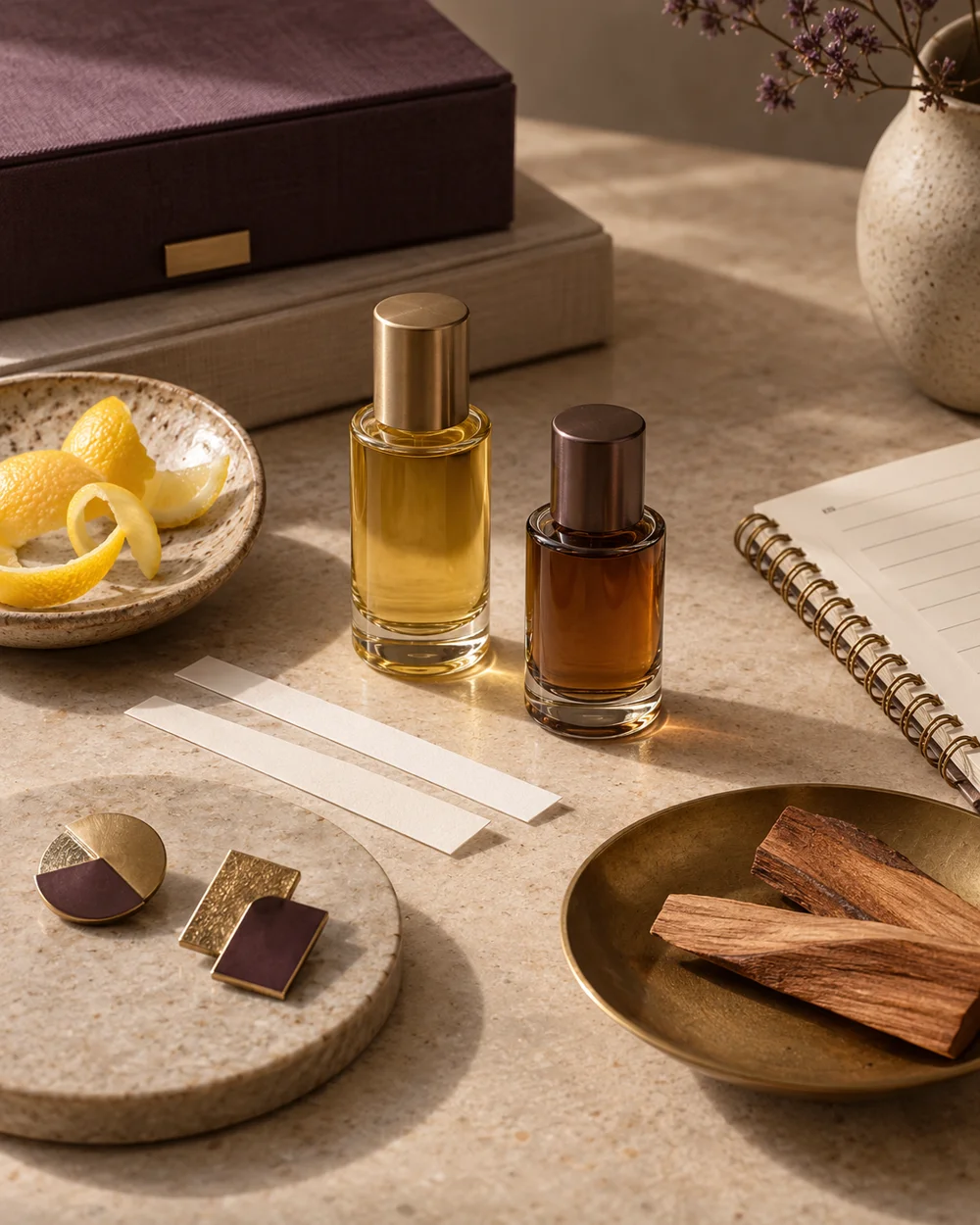
Scent pairing
Compare a Citrus Description With a Wood Description
Read the note ↗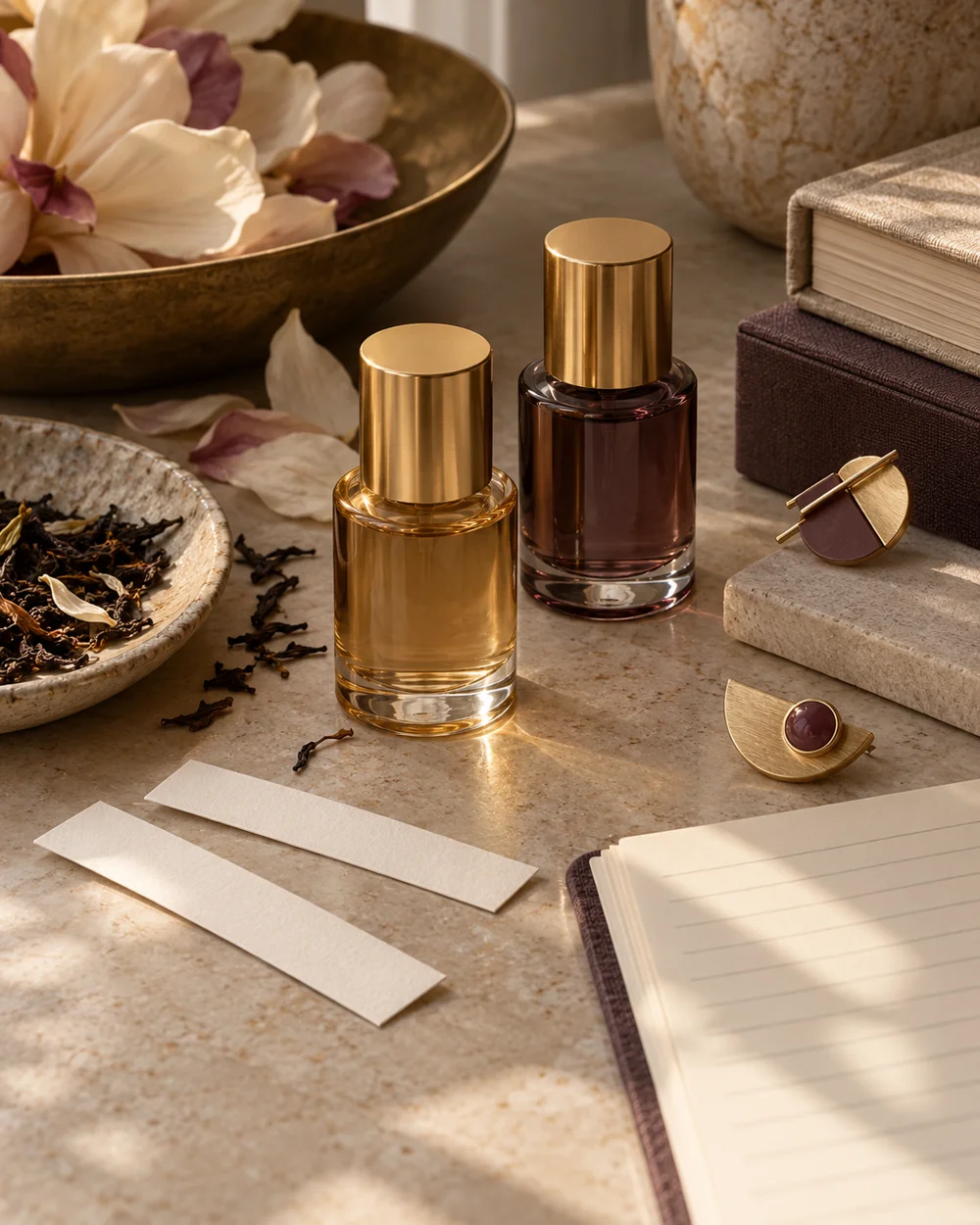
Scent pairing
Compare a Floral Description With a Tea Description
Read the note ↗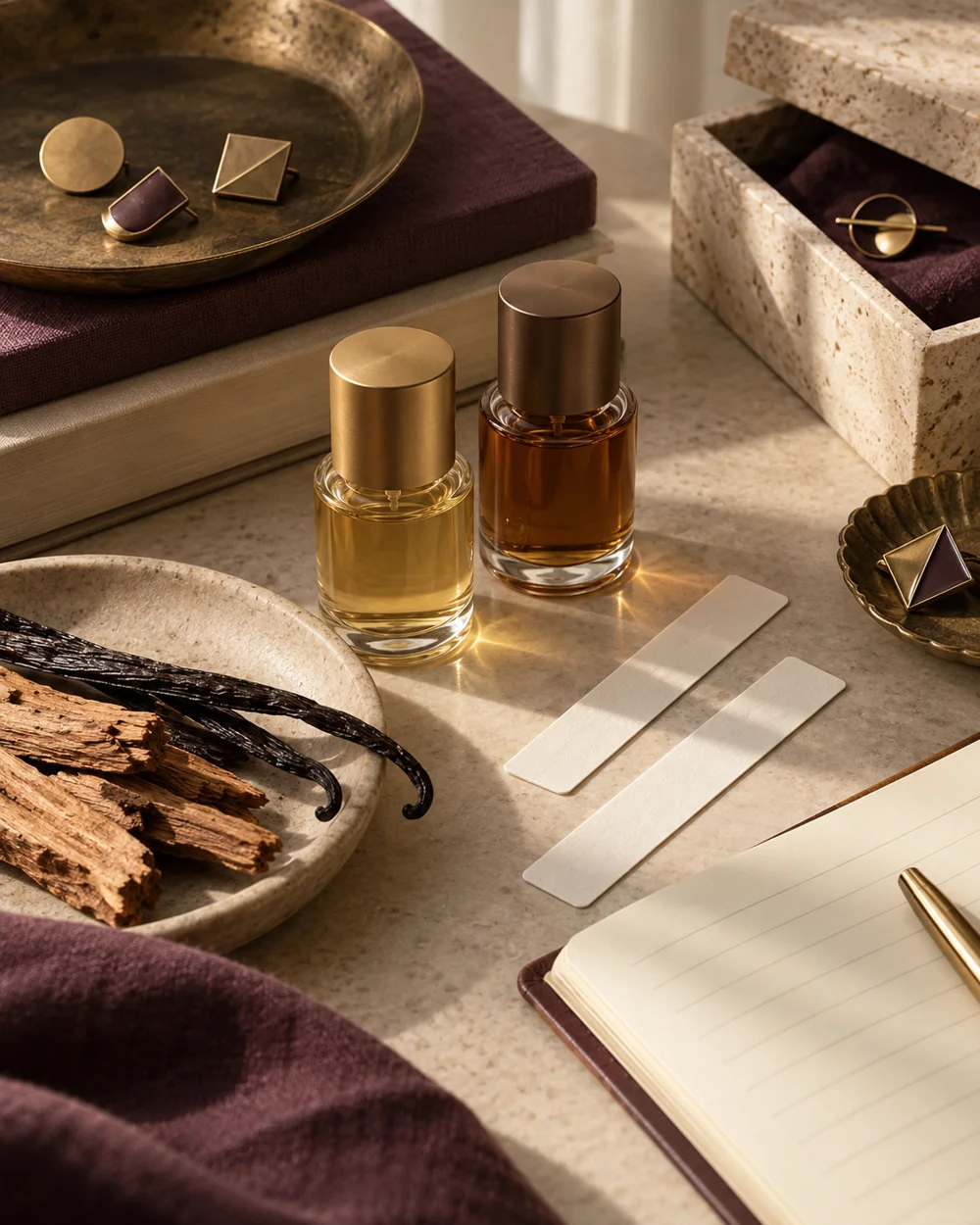
Scent pairing
Compare a Vanilla Description With a Wood Description
Read the note ↗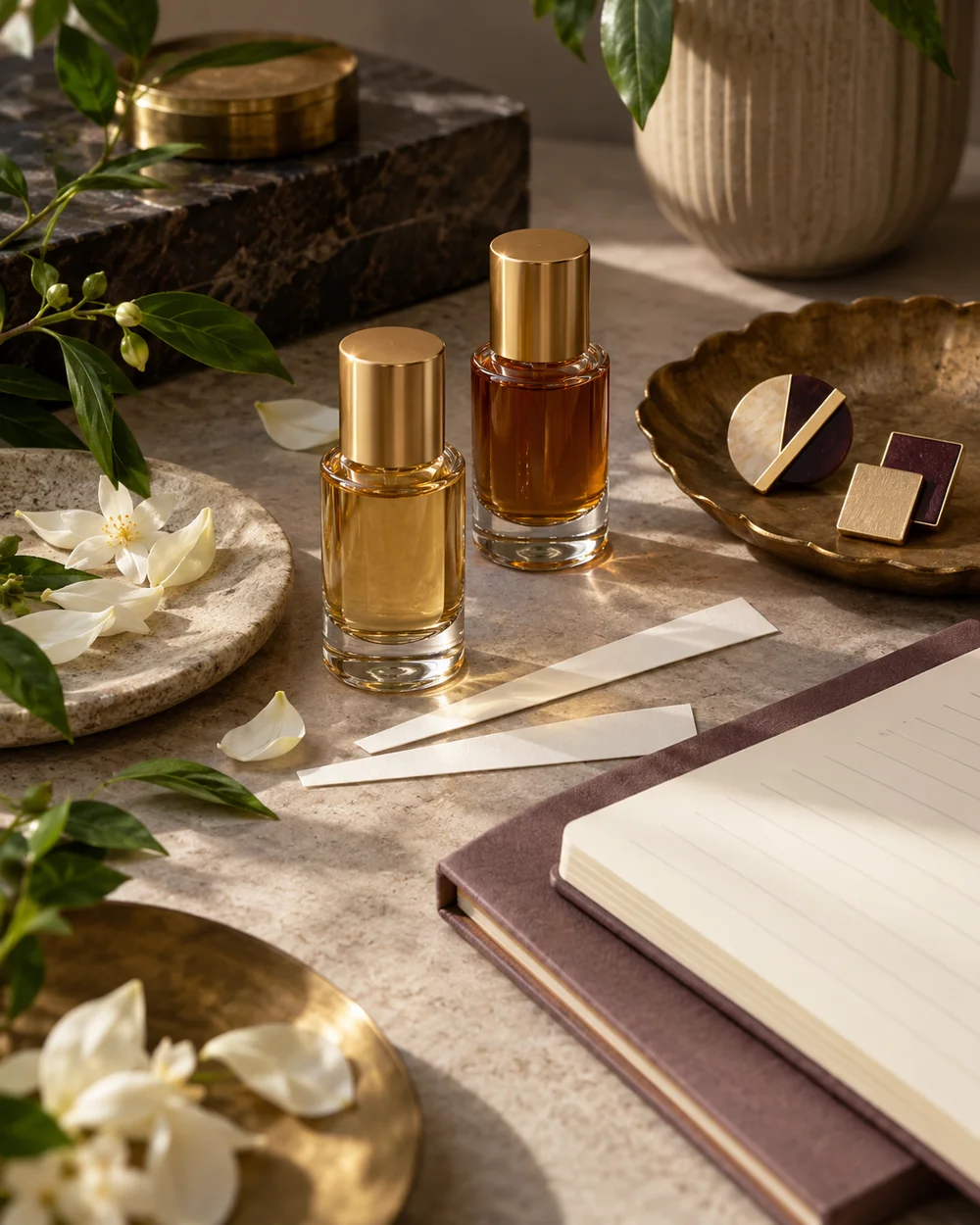
Scent pairing
Compare a Green Description With a Floral Description
Read the note ↗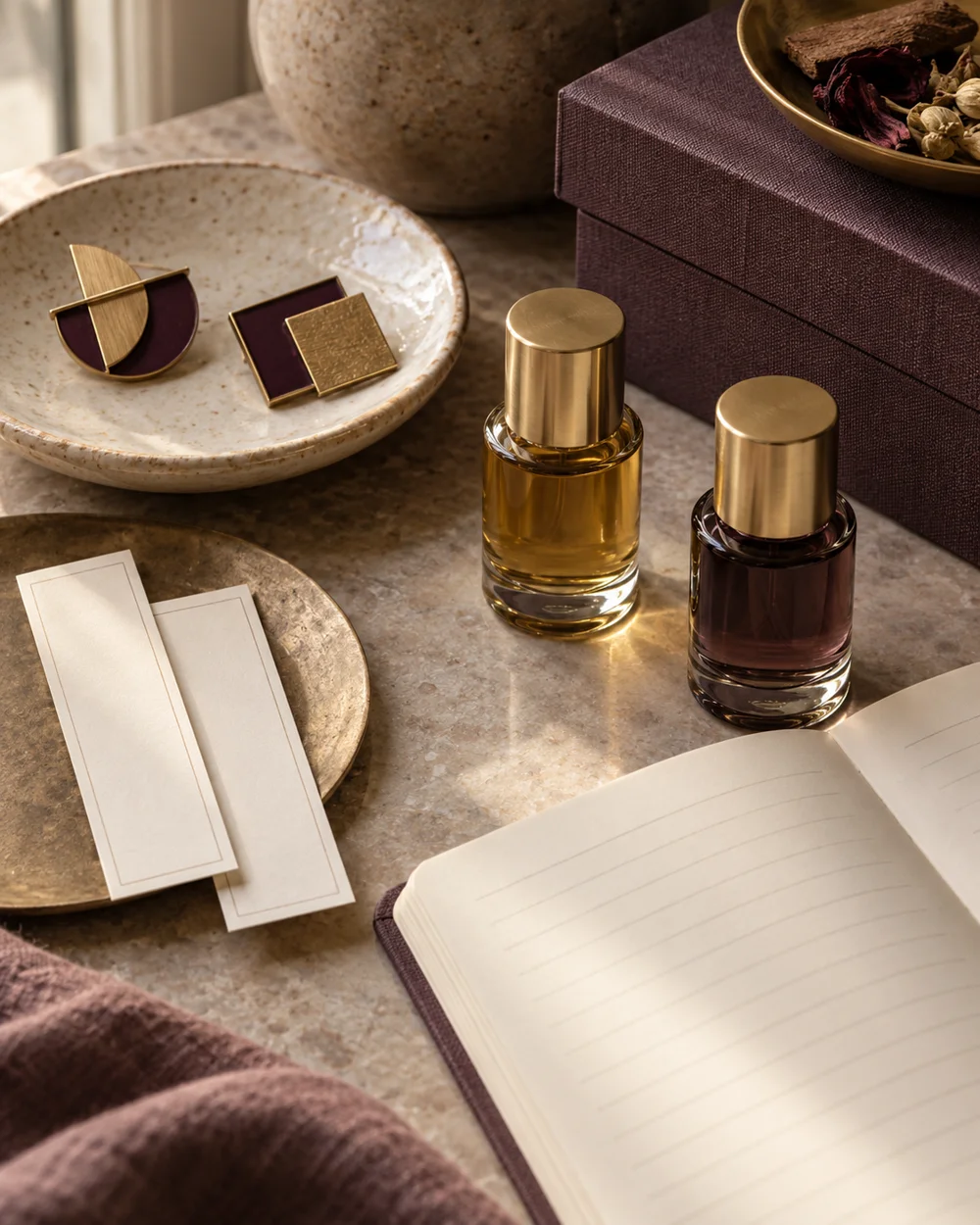
Scent pairing
Explore Fresh and Warm Words in Scent Notes
Read the note ↗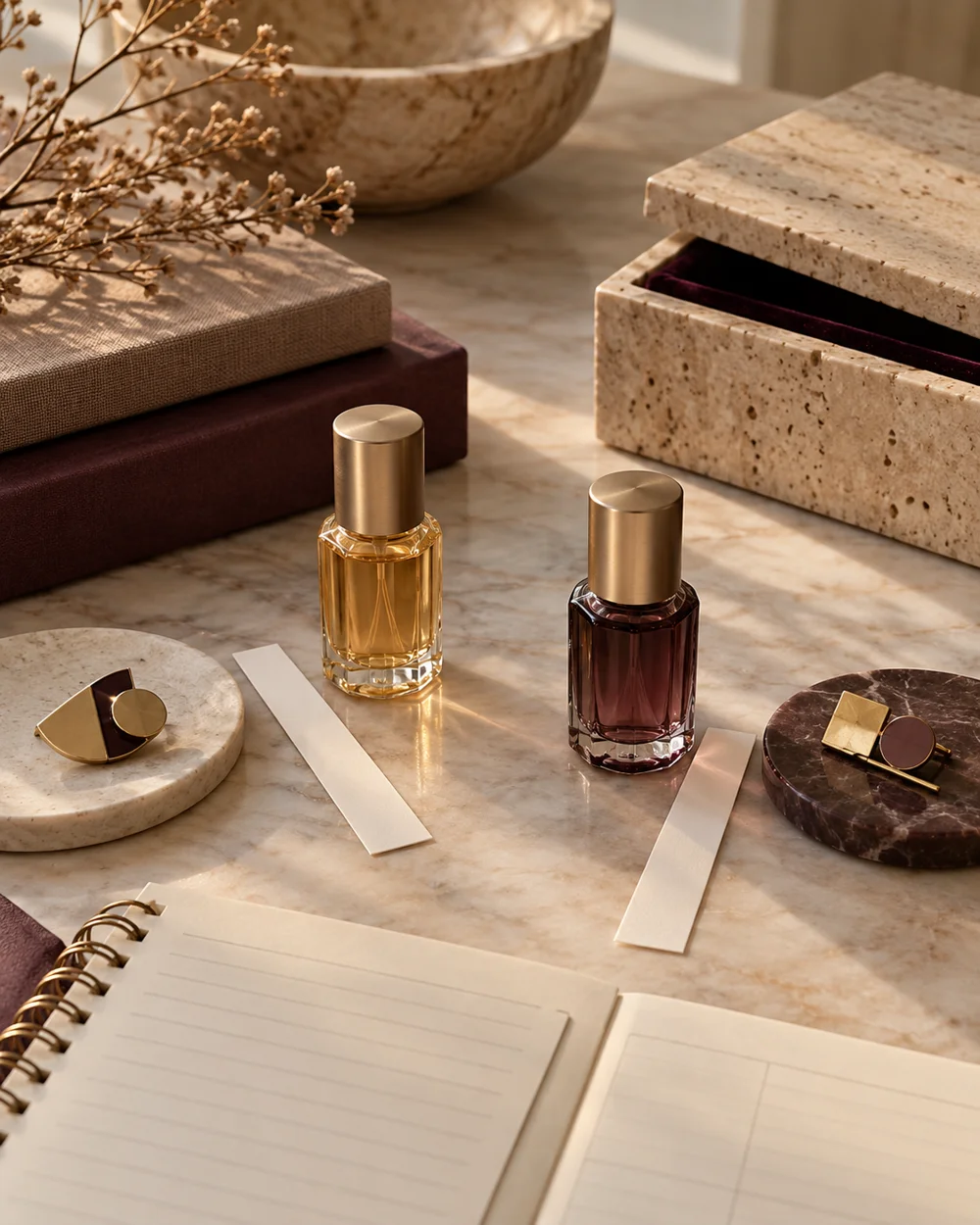
Scent pairing
Compare Two Scents Without Mixing Their Liquids
Read the note ↗
Scent pairing
Change One Scent at a Time in a Paper Comparison
Read the note ↗
Scent pairing
Record a First and Later Paper Impression
Read the note ↗
Scent pairing
Compare One Scent Alone With a Two-Strip Impression
Read the note ↗
Scent pairing
Use Plain Words Instead of Perfume Scores
Read the note ↗
Scent pairing
Separate a Maker Note List From Your Own Impression
Read the note ↗
Scent pairing
Compare Two Floral Descriptions on Paper
Read the note ↗
Scent pairing
Compare Two Wood Descriptions on Paper
Read the note ↗
Scent pairing
Explore Soft and Dry as Subjective Scent Words
Read the note ↗
Scent pairing
Compare a Citrus Description With a Tea Description
Read the note ↗
Scent pairing
Compare a Rose Description With a Vanilla Description
Read the note ↗
Scent pairing
Notice Which Paper Impression Seems More Prominent
Read the note ↗
Scent pairing
Keep a Two-Scent Comparison Small and Repeatable
Read the note ↗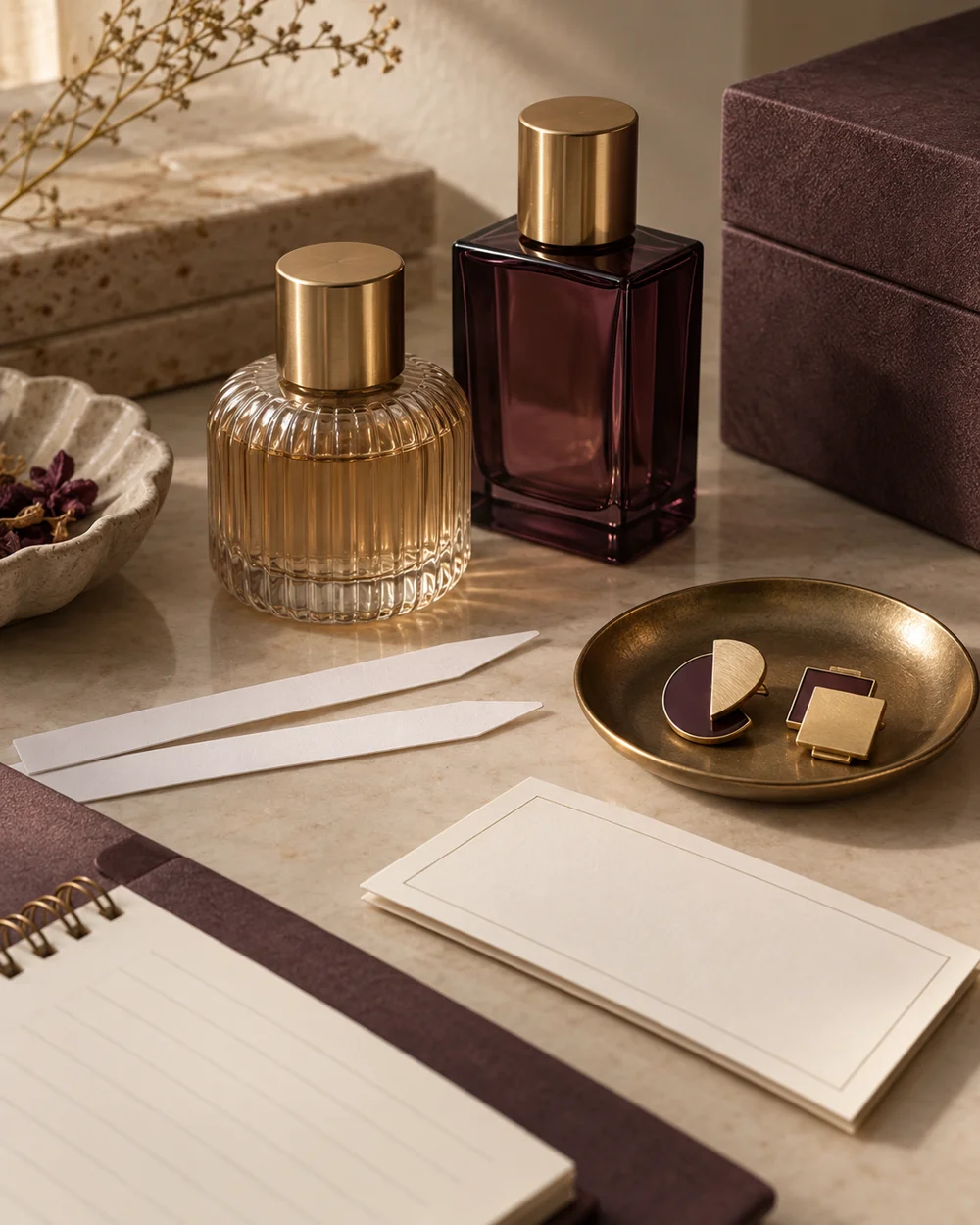
Scent pairing
Compare a Familiar Paper Sample With a New One
Read the note ↗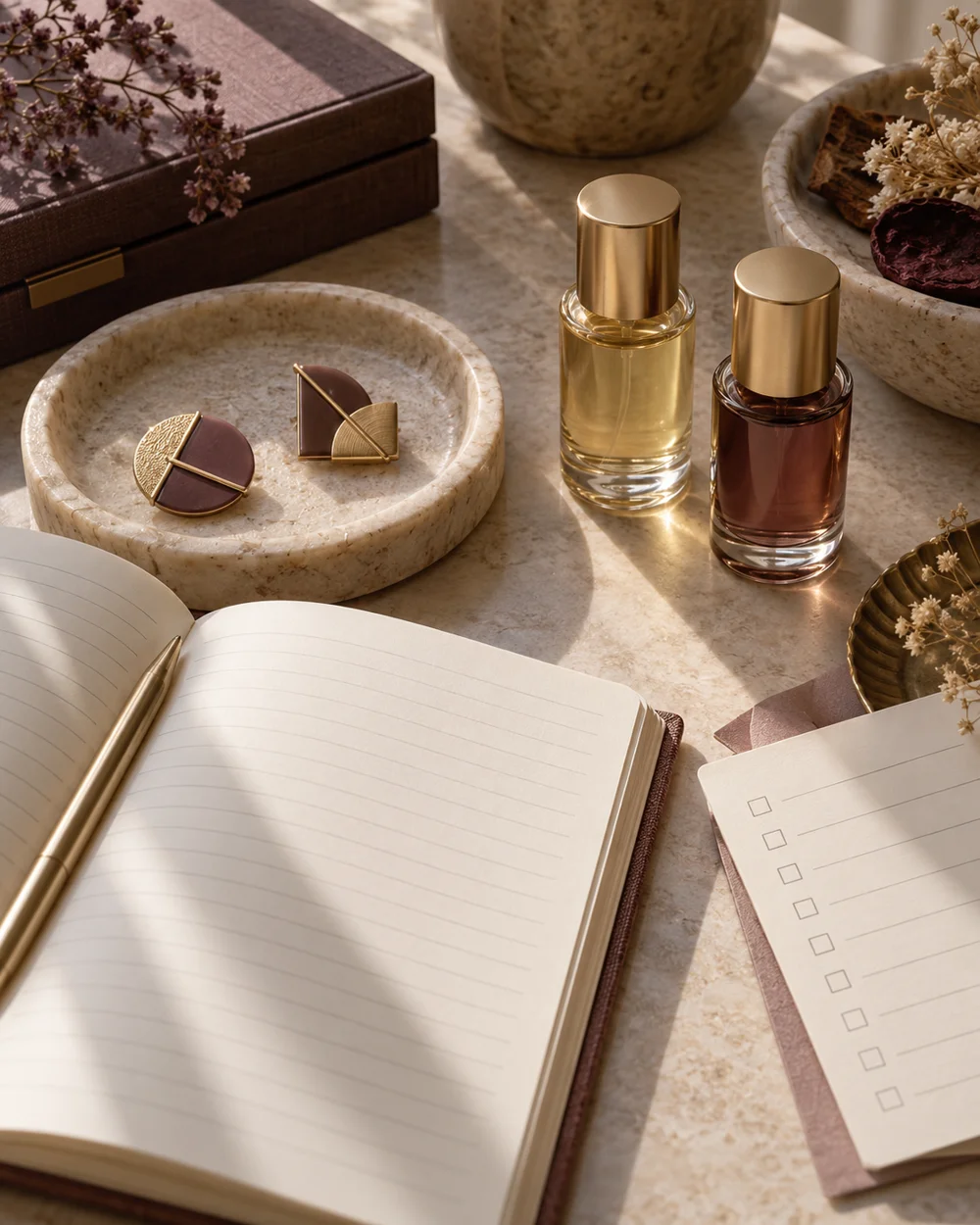
Scent pairing
Make a Paper Pairing Revisit List
Read the note ↗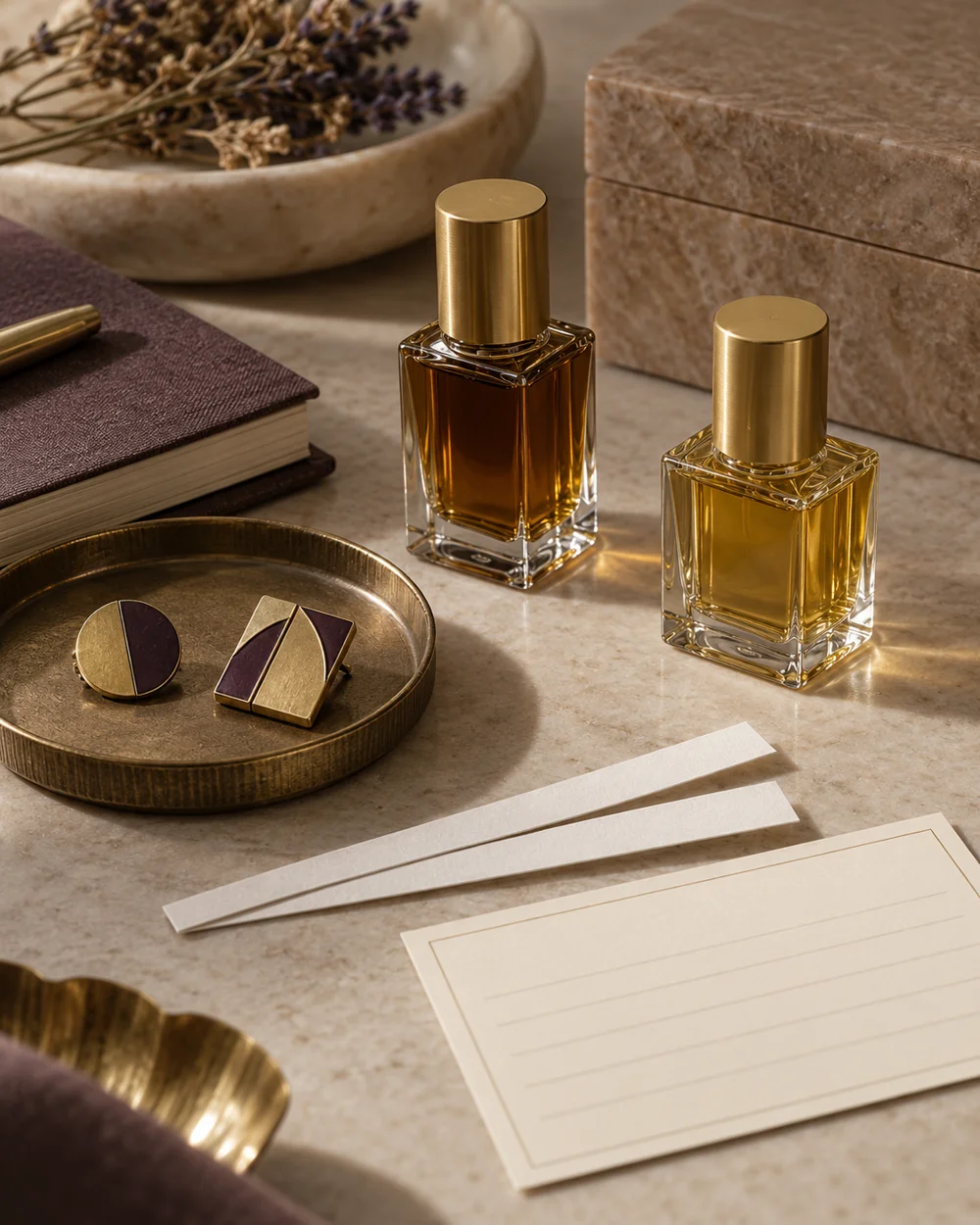
Scent pairing
Describe a Scent Pairing Without Guessing Ingredients
Read the note ↗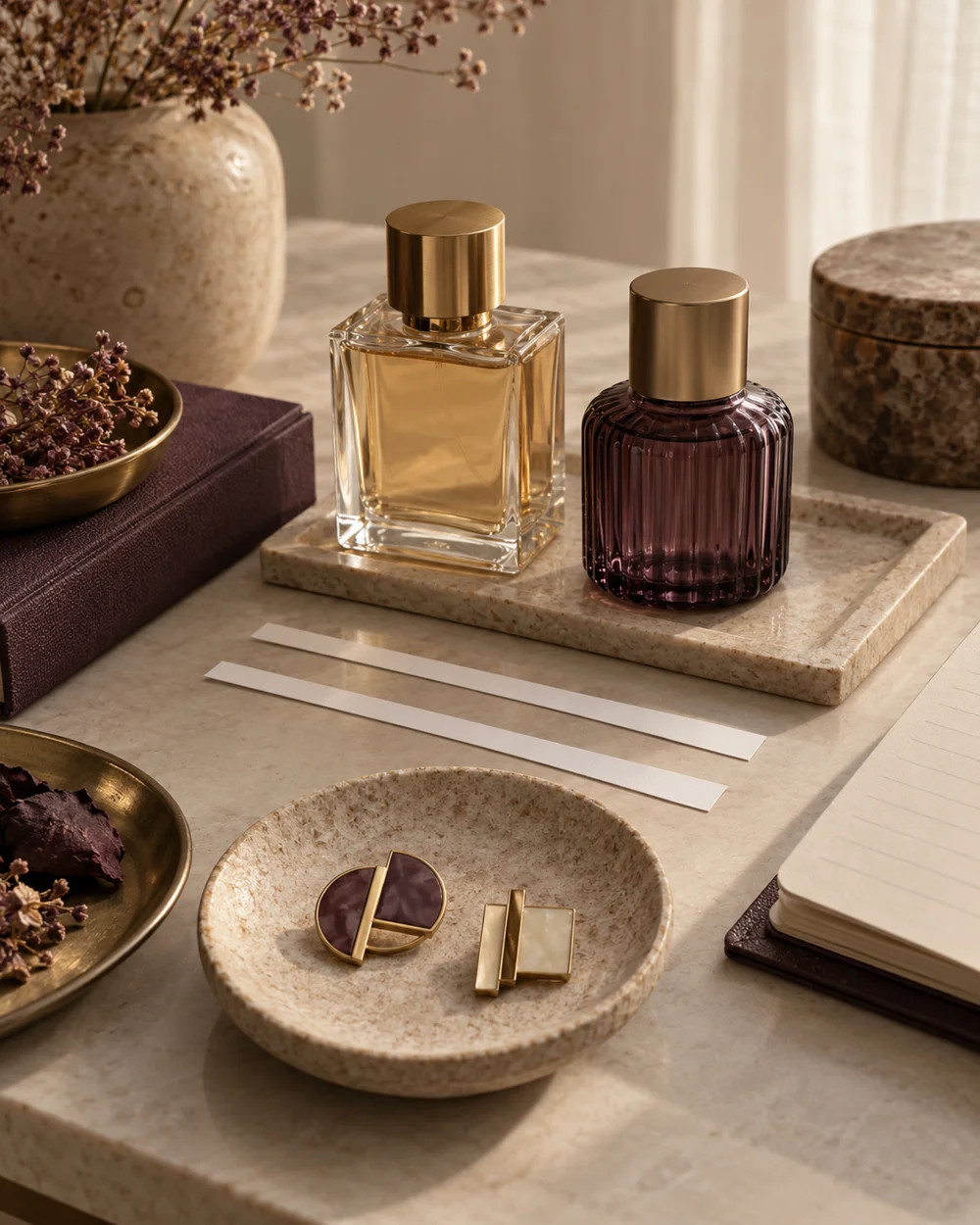
Scent pairing
Compare Paper Impressions Under Similar Conditions
Read the note ↗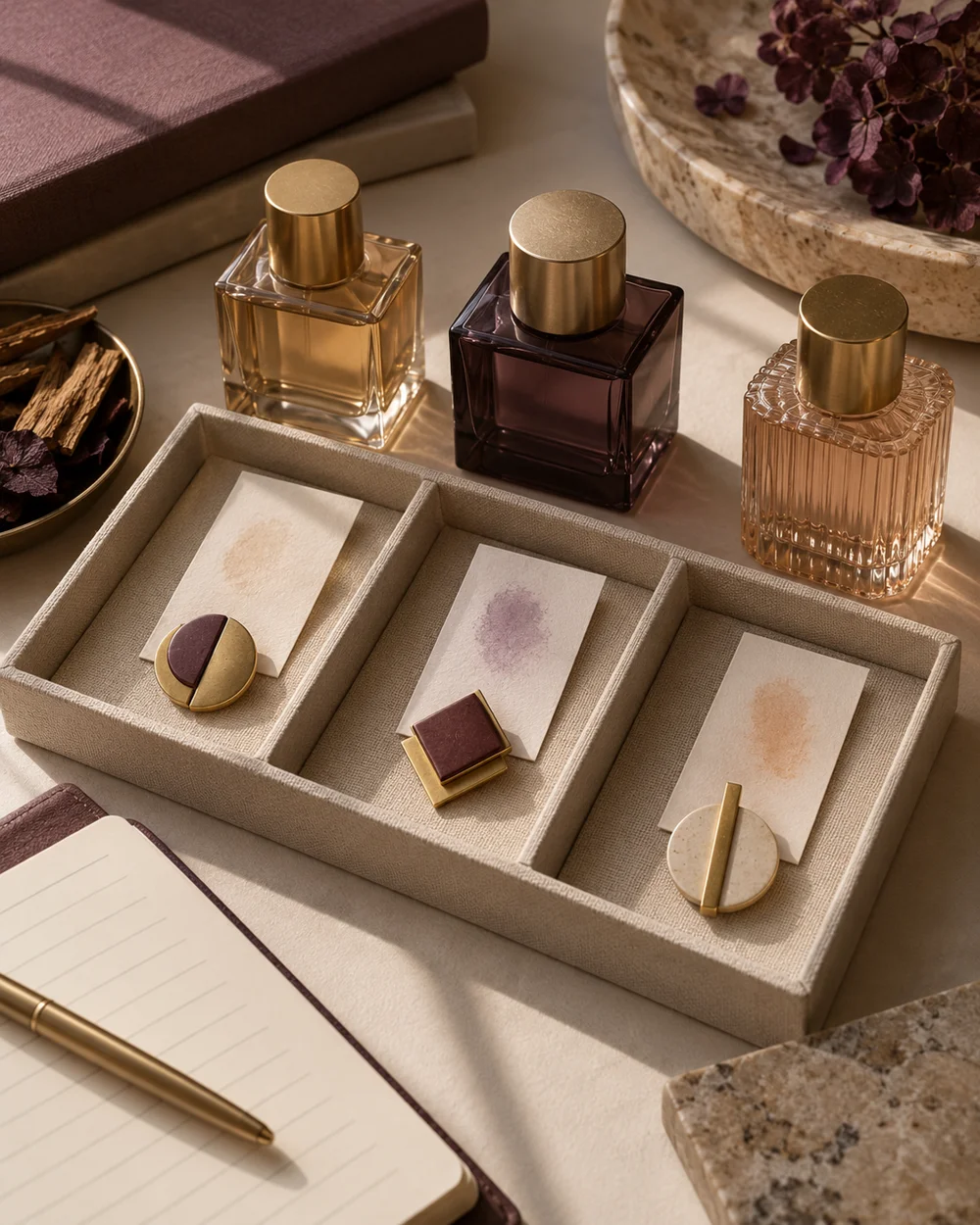
Scent pairing
Keep Scent Samples From Transferring Onto Each Other
Read the note ↗
Scent pairing
Write a Clear Conclusion After a Scent Comparison
Read the note ↗
Scent pairing