Compare a Rolled Belt With a Flat Storage Layout
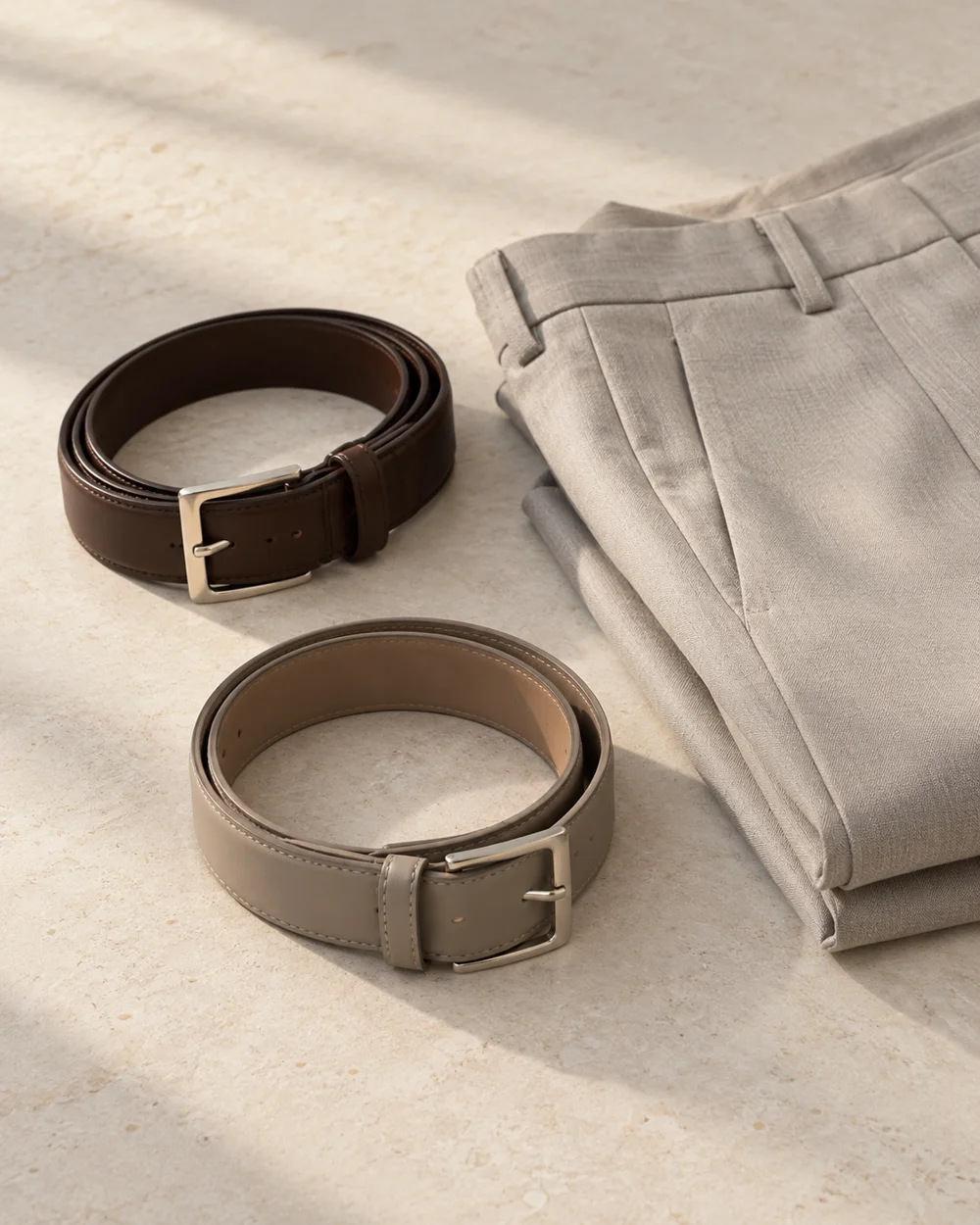
A relaxed roll and a flat layout use drawer space differently. Compare them using belts that can be stored in those ways according to their own directions.
Read the note ↓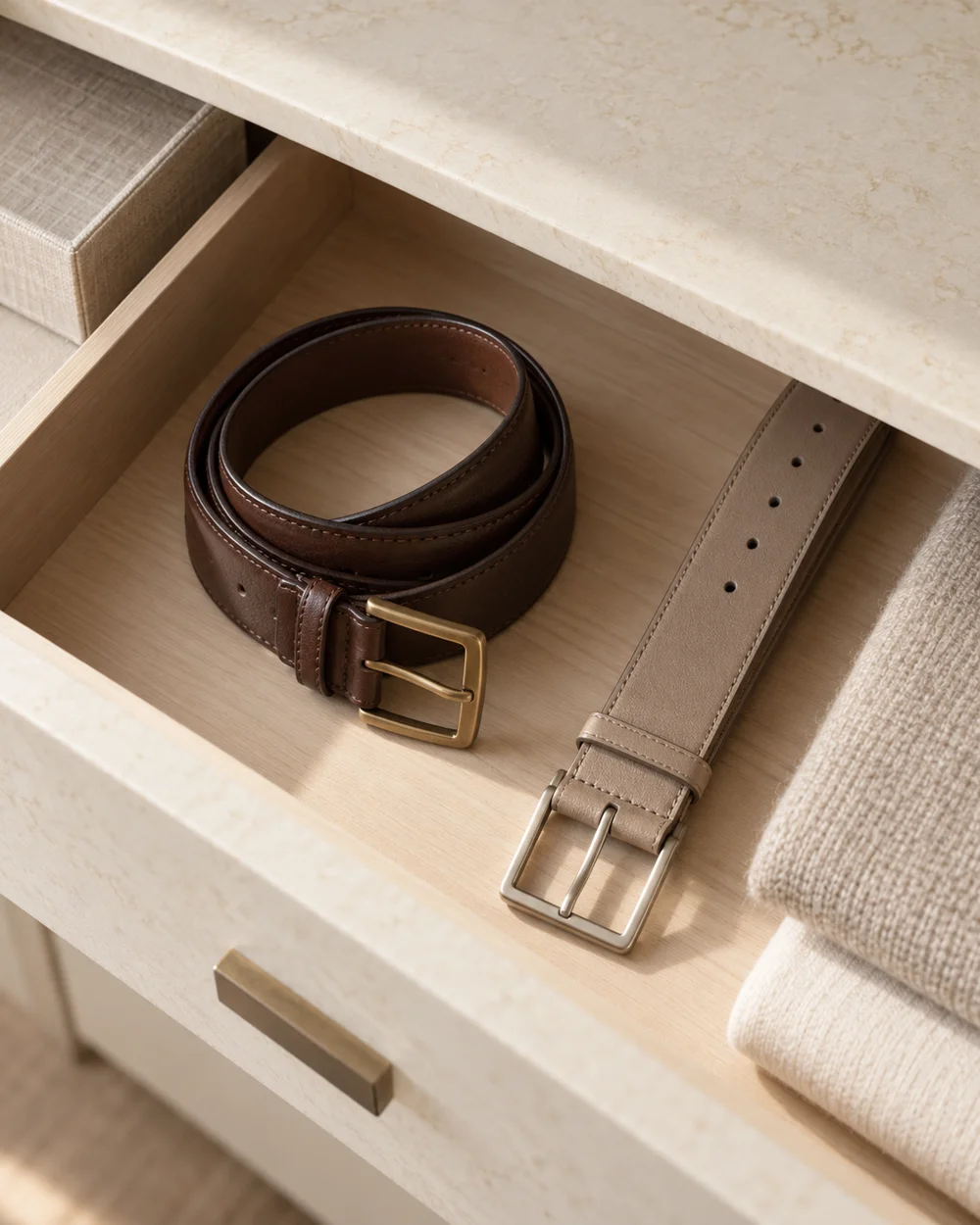
NOTE 01
Establish the product details
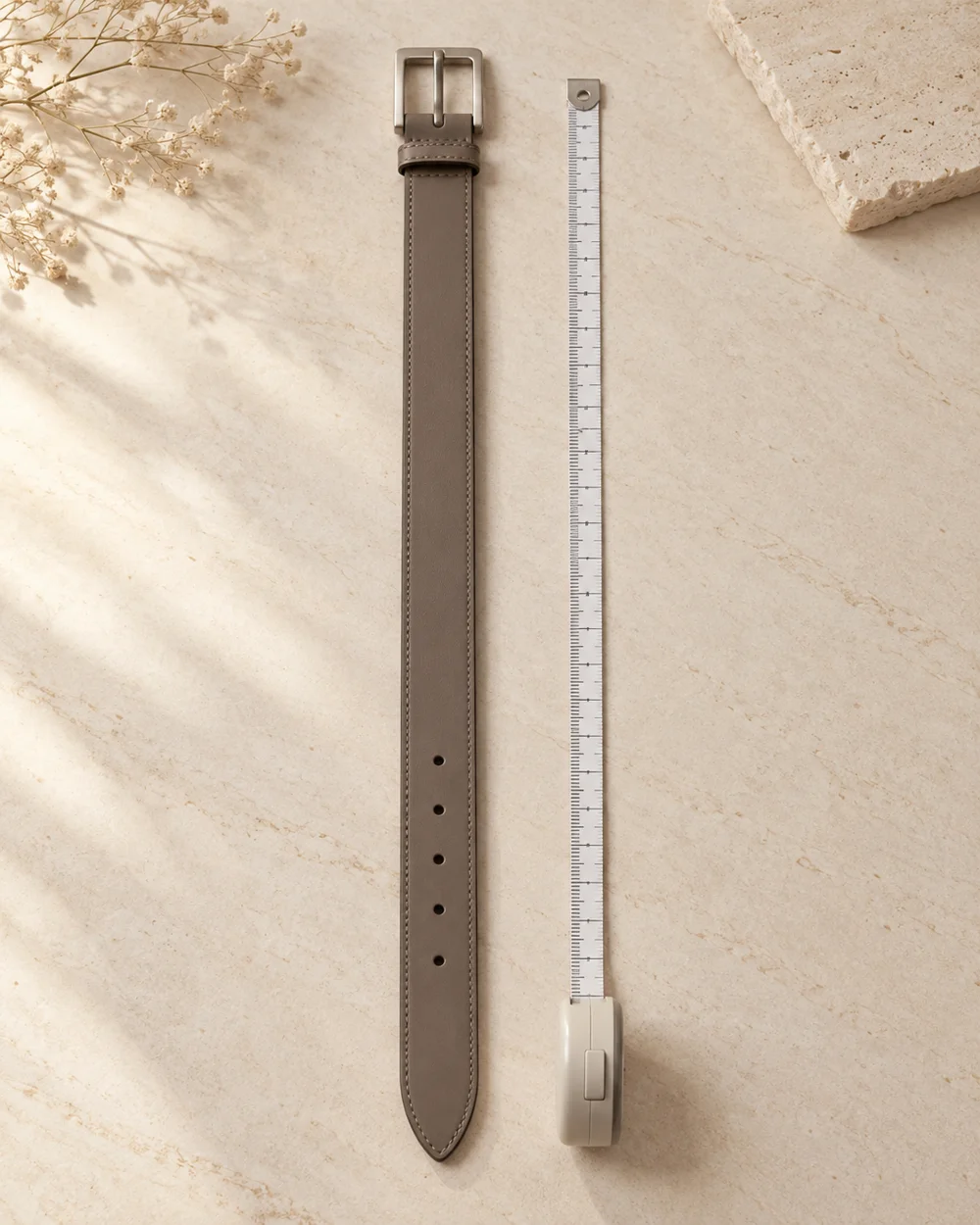
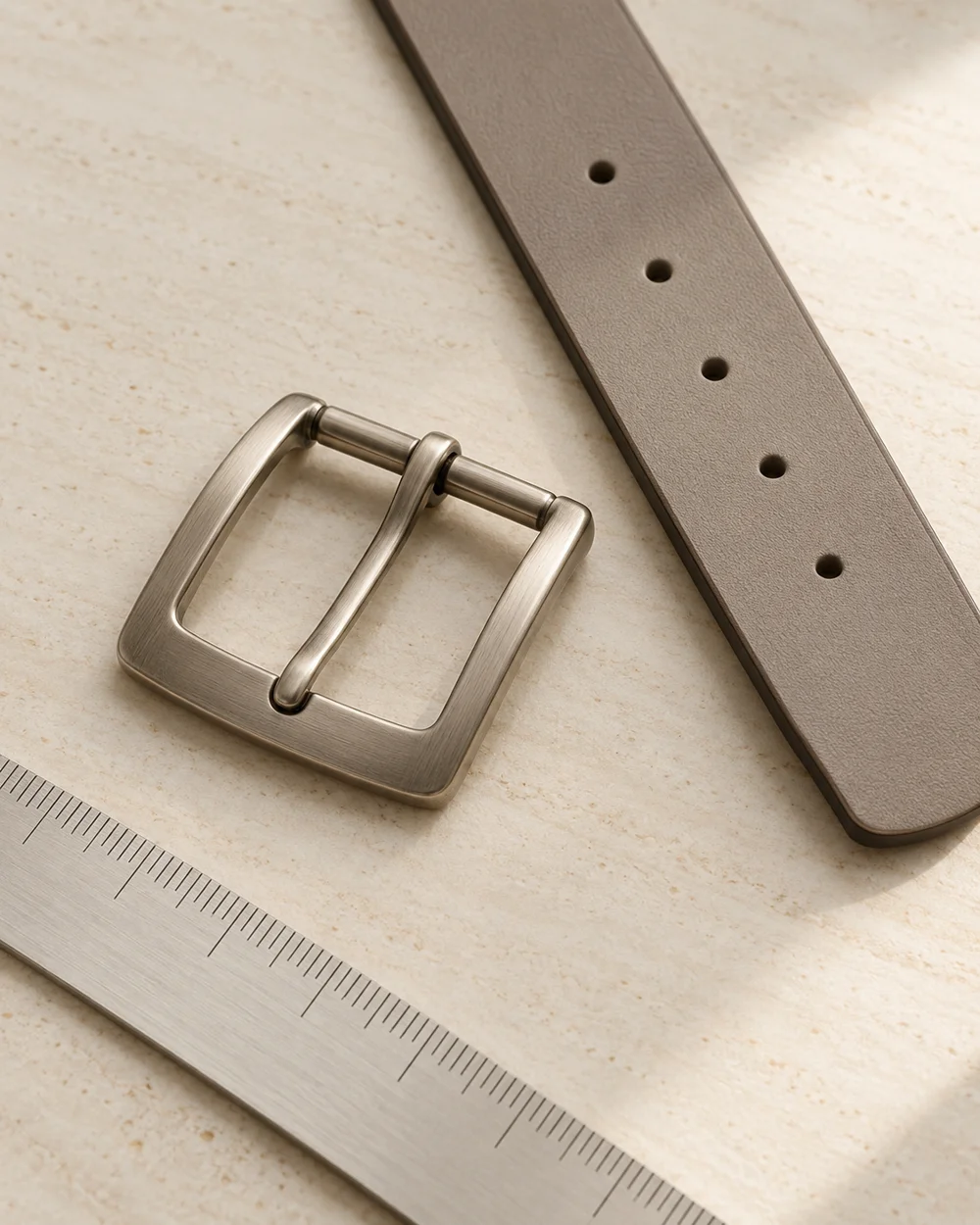
Measure the available drawer area and check that it is clean, dry, and free of rough hardware. Identify where the buckle will rest in each layout.
NOTE 02
Make the practical comparison
Try the broad roll without tightening it, then a flat position without a sharp bend. Keep other items out of the way for the first comparison. Photograph the two supported layouts with the drawer fully open, then make an ordinary access check. Keep the number of belts the same in both versions so the comparison is not biased by different contents. Record which layout made the intended pair easiest to reach. This gives the result a practical basis beyond whether circles or straight lines happen to look more coordinated in the drawer.
NOTE 03
Resolve the remaining question
Open and close the drawer gently and remove the belt normally. Notice whether the arrangement catches, shifts, or places pressure on a buckle or strap.
NOTE 04
Keep a useful reference
Choose the layout that supports the actual item and ordinary access. Store incompatible pieces separately rather than forcing a uniform display.
Before you go.
What is the main point to remember?
Compare the layout in use, including the drawer movement, rather than only in a photograph.
What should I establish before starting?
Measure the available drawer area and check that it is clean, dry, and free of rough hardware. Identify where the buckle will rest in each layout.
Original editorial guidance. Photographs are AI-generated concepts; they do not show verified products, material specifications, or tested results. Sources & approach.
Save to Pinterest ↗FOLLOW THE DETAIL